

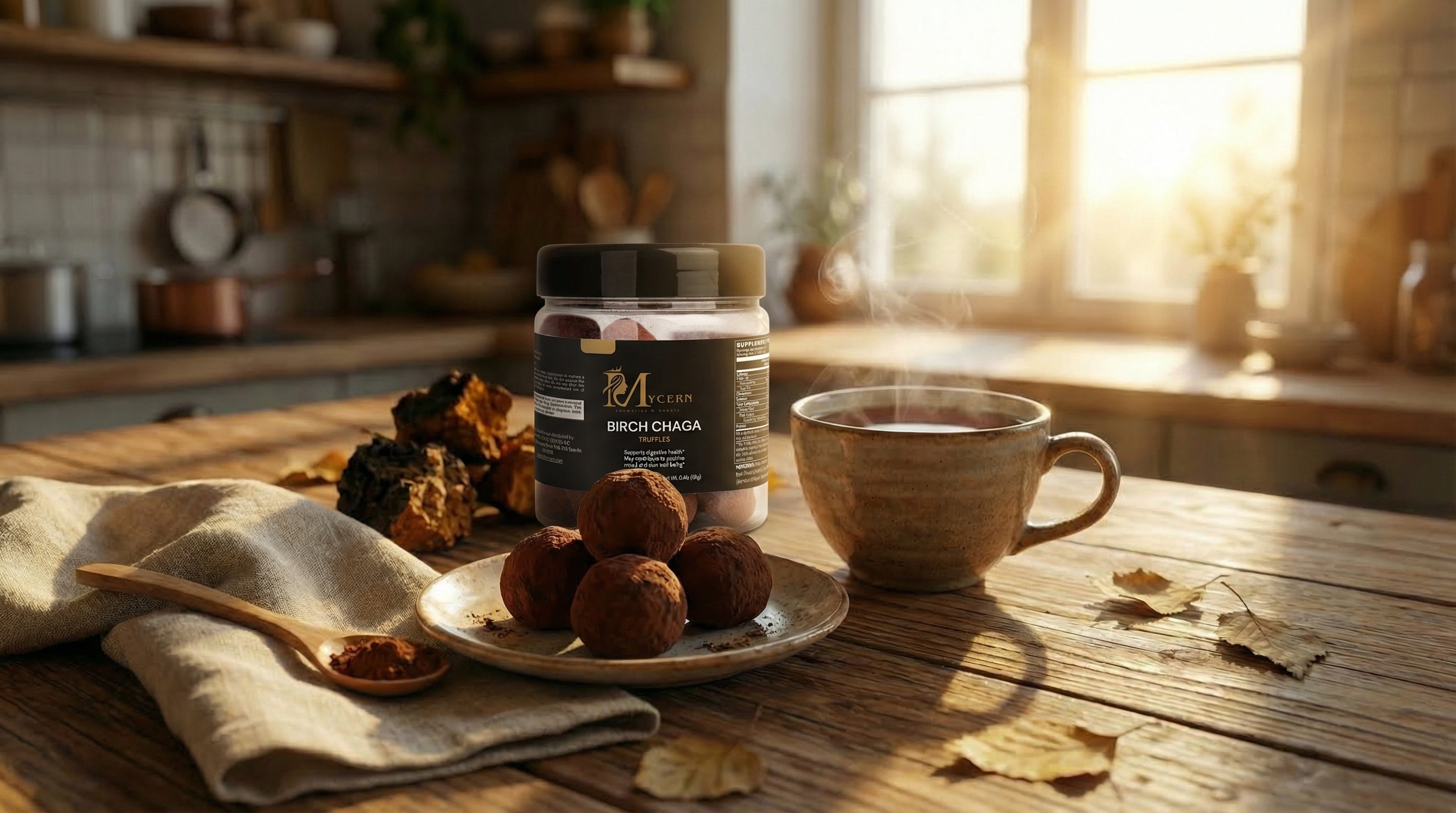
Chaga mushroom (Inonotus obliquus) has become a highly valued functional mushroom, known for its impressive antioxidant content and immune-supporting properties. Unlike culinary mushrooms, chaga is a parasitic fungus growing primarily on birch trees in cold climates across Russia, Siberia, Northern Europe, Canada, and northern parts of the United States. Its dark, charred appearance comes from a hardened mass of mycelium, or sclerotium, which concentrates bioactive compounds over 15–20 years. This symbiotic relationship with birch trees allows chaga to accumulate unique compounds like betulinic acid, contributing to its anti-inflammatory and cellular protection effects. Understanding chaga mushroom benefits requires examining its antioxidant potency, immune-regulating polysaccharides, and versatile ways to incorporate it into daily wellness routines.
This article explores:
-
What chaga mushroom is, where it grows, and why birch trees matter for its potency
-
The science behind chaga’s extraordinary antioxidants and cellular protection
-
How chaga polysaccharides support balanced immune function
-
Chaga’s anti-inflammatory compounds and overall wellness benefits
-
Practical ways to use chaga daily, from traditional tea to modern extracts and truffles
-
Safety considerations, dosing, and tips for selecting high-quality chaga products
The Science Behind Chaga’s Antioxidants

Chaga’s antioxidant capacity is exceptional. Measured using ORAC (Oxygen Radical Absorbance Capacity), chaga scores range from 52,400 to 146,700 per 100 grams—10 to 30 times higher than commonly recognized antioxidant foods like blueberries or dark chocolate. These antioxidants come from a combination of polyphenols, melanin, superoxide dismutase (SOD), triterpenoids, and polysaccharides. This diverse profile allows chaga to neutralize a wide range of free radicals, offering broad cellular protection rather than targeting only specific oxidative stress.
Immune Function Support
Chaga polysaccharides, particularly beta-glucans, are the main compounds responsible for immune modulation. Unlike stimulatory “boosters,” chaga helps balance immune activity—enhancing defense when needed while preventing overreaction. Studies show chaga polysaccharides activate macrophages, natural killer (NK) cells, and T-cells, while influencing cytokine production (IL-6, TNF-α, IFN-γ) to promote a regulated immune response. Functional mushrooms like chaga support the body’s natural defenses rather than forcing activity, helping improve resilience, recovery, and overall immune performance.
Anti-Inflammatory and Cellular Protection
Chaga’s antioxidant and anti-inflammatory properties work together to reduce chronic oxidative stress and inflammation. Compounds like betulinic acid, polyphenols, and triterpenoids inhibit NF-κB and COX-2 pathways, reducing inflammatory cytokines, while activating Nrf2 to enhance the body’s antioxidant defenses. These mechanisms protect cells, support healthy mitochondrial function, and help maintain overall cellular health. Birch-derived chaga extract is particularly valuable because betulinic acid is present in higher concentrations compared to chaga grown on other tree species or lab-cultivated mushrooms.
Nutritional Profile and Bioavailability

In addition to bioactive compounds, chaga provides dietary fiber (from polysaccharides and chitin), B-complex vitamins (B2, B3, B5), vitamin D2, minerals (potassium, calcium, iron, manganese, zinc), and modest amino acids. Preparation methods affect bioavailability: traditional hot water extraction captures polysaccharides and water-soluble antioxidants, while alcohol extraction retrieves triterpenes like betulinic acid. Dual extraction combines both, offering the most comprehensive bioactive profile. Whole chaga powder retains all compounds but may require digestion of tough chitin structures for absorption.
Traditional Use and Modern Applications
Chaga has a long history in traditional medicine systems, from Siberia and Russia to China and indigenous cultures. Traditionally consumed as tea, chaga was valued for vitality, digestion, and overall wellness. Modern users have expanded its applications to liquid extracts, capsules, and powder. Typical supplementation ranges from 500–3,000 mg of concentrated extract daily, or 1–3 grams of dried chaga tea. Regular consumption supports immune modulation, antioxidant defense, and overall resilience.
Creative methods include adding chaga powder to smoothies, coffee, hot chocolate, or golden milk. MyCern Birch Chaga Truffles offer a convenient, functional superfood alternative, combining concentrated chaga extract with flaxseed, cacao, and other wholesome ingredients for an easy daily routine.
MyCern Birch Chaga Truffles: Convenient Daily Wellness
For those seeking a delicious, convenient way to incorporate chaga into daily wellness routines, MyCern Birch Chaga Truffles combine concentrated birch chaga extract with complementary natural superfoods including flaxseed (providing omega-3 fatty acids and fiber), cacao (adding additional antioxidants and minerals), and other wholesome ingredients creating a treat that's both enjoyable and functional. This format eliminates the time investment of traditional tea preparation while providing chaga's beneficial compounds in a form that's easy to integrate into busy lifestyles—proof that supporting wellness with functional mushrooms for health doesn't require sacrifice or complicated routines.

Safety and Considerations
Chaga is generally safe for healthy adults, but certain precautions are necessary:
-
Blood-thinning medications: Chaga may have mild anticoagulant effects.
-
Diabetes medications: Chaga can influence blood sugar.
-
Autoimmune conditions: Consult healthcare providers due to immune-modulating properties.
-
Kidney disease: Chaga contains oxalates.
-
Pregnancy and breastfeeding: Insufficient safety data; avoid use.
Select high-quality, birch-harvested chaga with sustainable sourcing, third-party testing, and clearly labeled extraction methods.
Practical Guidelines for Chaga Supplementation
-
Start with modest doses (500–1,000 mg extract daily or one cup of tea).
-
Be consistent over time; benefits accumulate gradually over weeks to months.
-
Choose dual-extraction or combination water/alcohol extracts for maximum bioactive compounds.
-
Flexible timing: morning, afternoon, or evening depending on routine.
-
Combine with balanced nutrition, exercise, sleep, and stress management for holistic wellness.
-
Track personal outcomes like energy, immune resilience, or recovery.
-
Consult professionals if taking medications or managing chronic conditions.

Frequently Asked Questions
How does chaga differ from other medicinal mushrooms?
Chaga offers higher antioxidant content, unique birch-derived compounds, and immune-modulating polysaccharides, distinguishing it from reishi or turkey tail.
How long does chaga take to work?
Benefits build gradually: mild improvements may appear in 2–4 weeks, with stronger immune and anti-inflammatory effects typically evident after 6–12 weeks.
Can I drink chaga tea daily?
Yes, traditional use and modern research support safe daily consumption in moderate amounts.
Is chaga better than vitamin C or other antioxidants?
Chaga is complementary, providing a multi-compound antioxidant profile that works through different mechanisms than single nutrients like vitamin C.
Conclusion
Chaga mushroom benefits are backed by both centuries of traditional use and emerging scientific evidence. With extraordinary antioxidants, immune-modulating polysaccharides, and anti-inflammatory compounds like betulinic acid, birch chaga extract supports cellular protection, immune function, and overall wellness. Incorporating chaga through tea, extracts, or functional superfoods like MyCern Birch Chaga Truffles offers a practical, evidence-based approach to enhancing antioxidant defenses and immune regulation. For best results, chaga should be part of a holistic wellness strategy, including balanced nutrition, stress management, rest, and physical activity, with benefits appearing gradually through consistent use.

References
- Balandaykin, M. E., & Zmitrovich, I. V. (2015). Review on Chaga medicinal mushroom, Inonotus obliquus (Higher Basidiomycetes): Realm of medicinal applications and approaches on estimating its resource potential. International Journal of Medicinal Mushrooms, 17(2).
- Géry, A., Dubreule, C., André, V., Rioult, J. P., Bouchart, V., Heutte, N., ... & Garon, D. (2018). Chaga (Inonotus obliquus), a future potential medicinal fungus in oncology? A chemical study and a comparison of the cytotoxicity against human lung adenocarcinoma cells (A549) and human bronchial epithelial cells (BEAS-2B). Integrative cancer therapies, 17(3), 832-843.
- Glamočlija, J., Ćirić, A., Nikolić, M., Fernandes, Â., Barros, L., Calhelha, R. C., ... & Van Griensven, L. J. (2015). Chemical characterization and biological activity of Chaga (Inonotus obliquus), a medicinal “mushroom”. Journal of ethnopharmacology, 162, 323-332.
- Shashkina, M. Y., Shashkin, P. N., & Sergeev, A. V. (2006). Chemical and medicobiological properties of chaga. Pharmaceutical Chemistry Journal, 40(10), 560-568.
- Wasser, S. P. (2017). Medicinal mushrooms in human clinical studies. Part I. Anticancer, oncoimmunological, and immunomodulatory activities: a review. International journal of medicinal mushrooms, 19(4).


