

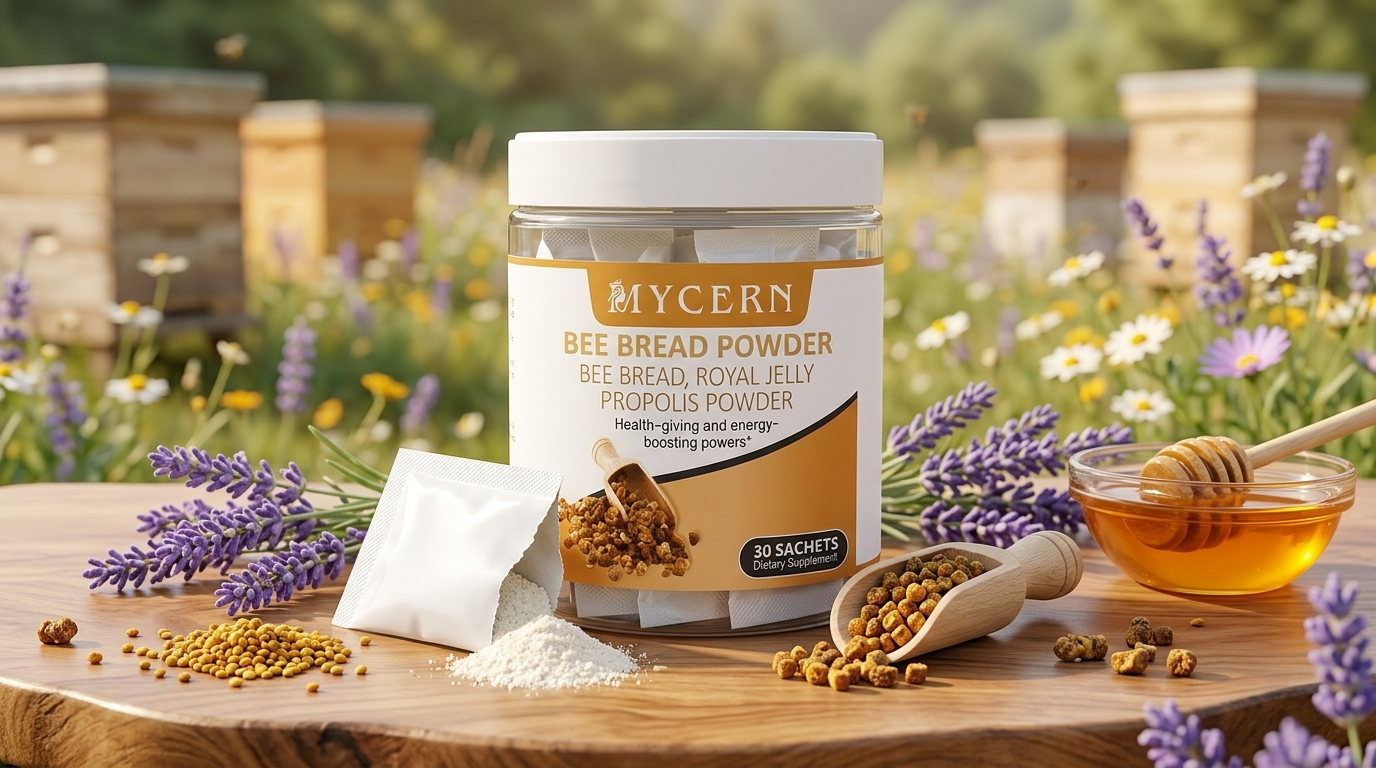
Bee bread is one of those foods that sounds strange until you actually look into what it does. Unlike most supplements that arrive in a lab and get marketed as natural, bee bread genuinely is natural. Bees have been making it for millions of years. It starts as raw pollen, gets packed into honeycomb cells with nectar and bee enzymes, ferments over about two weeks, and comes out the other side as something nutritionally quite different from what it was going in. If you have been curious about adding mycern bee bread powder to your daily routine, this is worth reading before you decide.
What Is Bee Bread? Definition, Origin and What Makes It Different
Bee bread is a fermented food produced inside the hive when worker bees pack collected pollen into empty honeycomb cells, compress it using their legs, add nectar and digestive enzymes, then seal the top with a thin cap of honey. Naturally occurring yeasts and lactic acid bacteria take over from there. The fermentation process runs for one to two weeks and transforms the pollen in ways that matter for anyone eating it.
The outer wall of a pollen grain, called the exine, is extremely tough. In its raw state, much of the nutritional content inside pollen passes through the human digestive system without being absorbed. Fermentation breaks that wall down. The vitamins, amino acids, enzymes, and plant compounds stored inside become far more accessible once bee bread is fully fermented. That single difference is why researchers and practitioners tend to consider bee bread a more bioavailable form of pollen rather than just an alternative to it.

How Bees Make Bee Bread and Why the Fermentation Process Matters
Forager bees collect pollen from flowers and bind it into pellets using nectar and leg bristles. Back at the hive, they deposit those pellets into comb cells, where house bees tamp them down firmly to remove air pockets. The added honey seals the top and creates an anaerobic environment that lactic acid bacteria thrive in.
The bacteria produce lactic acid as a byproduct, which lowers the pH inside the cell and acts as a natural preservative. This is essentially the same mechanism behind fermented dairy products like yogurt or kefir, just done by bees. The fermentation also creates new compounds, including short-chain fatty acids and additional enzymes, that are not present in raw pollen at all. For the bee colony, bee bread is the primary protein source used to raise young bees and sustain the hive through winter.
Bee Bread Nutrition Facts: Vitamins, Minerals, Protein and Bioactive Compounds
The nutritional profile of bee bread shifts depending on what plants the bees foraged from, the region and season, and how long the fermentation ran. That said, certain nutrients show up consistently across samples from different parts of the world.
Key Nutrients Found in Fermented Bee Bread Pollen
Bee bread contains all essential amino acids, which makes it a complete protein source. That is unusual for something plant-derived and worth noting if you pay attention to your protein intake. Beyond protein, the nutrient list includes:
- B vitamins: B1, B2, B3, B6, and folic acid, which support energy metabolism and nerve function.
- Vitamins C and E: Both function as antioxidants and support skin integrity and immune response.
- Minerals: Calcium, magnesium, potassium, iron, zinc, and selenium appear in measurable amounts across most bee bread samples.
- Flavonoids and phenolic acids: These plant-based compounds carry most of the antioxidant and anti-inflammatory activity associated with bee bread.
- Fatty acids: Omega-3 and omega-6 fatty acids in ratios considered favorable for general health.
- Enzymes: Including diastase and phosphatase, introduced during the fermentation process.
The protein content ranges roughly between 15 and 35 percent by dry weight, depending on floral source. Carbohydrate content sits around 25 to 40 percent, primarily from the residual honey and pollen sugars. Fat content is lower, typically 5 to 10 percent.
Health Benefits of Bee Bread: What the Research Actually Shows
The body of research on bee bread is smaller than what you would find for more studied supplements, but it has grown noticeably over the past decade. Most studies are still in laboratory or animal model phases, which means some caution is warranted about applying findings directly to humans. That said, the patterns across studies are consistent enough to take seriously.
"Bee bread is characterized by a more complex chemical composition compared to fresh bee pollen, showing enhanced antioxidant, antimicrobial, and anti-inflammatory properties as a result of the fermentation process carried out by microorganisms naturally present in the hive."— Urcan et al., Molecules, National Center for Biotechnology Information (NCBI)
Antioxidant Properties and Protection Against Cell Damage
The antioxidant activity of bee bread is one of its most replicated findings. The flavonoids and phenolic compounds it contains neutralize free radicals, which are unstable molecules that damage cell membranes, DNA, and proteins over time. Oxidative stress from accumulated free radical activity contributes to visible skin aging, chronic inflammation, and a range of long-term health conditions.
Multiple laboratory studies have tested bee bread extracts against standardized antioxidant assays and found strong activity. Importantly, the antioxidant capacity of bee bread tends to be higher than raw pollen from the same floral source, which researchers attribute directly to the fermentation process generating additional phenolic compounds.
Gut Health and Digestive Support Through Lactic Acid Bacteria
Because bee bread is a fermented food, it naturally contains lactic acid bacteria that can support a healthy gut environment. These are the same class of microorganisms found in fermented dairy and vegetable foods that have been linked to better digestion, improved immune function, and more efficient nutrient absorption.
The gut connection matters for skin health too. A well-functioning gut microbiome helps regulate inflammation throughout the body, and chronic low-grade inflammation is one of the main contributors to dull, reactive, or acne-prone skin. Bee bread addresses this at the source rather than treating symptoms on the surface.
Immune Function, Liver Support and Anti-Inflammatory Activity
Animal studies have found that bee bread supplementation supported healthy liver enzyme levels and lipid metabolism markers. While these findings have not yet been replicated in large human trials, the underlying mechanisms, specifically the role of flavonoids and short-chain fatty acids in reducing inflammatory signaling, are well-established in nutritional science.
The zinc, selenium, and vitamin C content in bee bread also contribute to immune function directly. These are nutrients with established roles in the production and activity of immune cells. Bee bread is not a treatment for any condition, but as part of a consistent wellness routine, the combination of antioxidants, fermentation-derived probiotics, and micronutrients gives it a solid functional foundation. Research published in MDPI Molecules found that bee bread phenolic extracts showed notable cytoprotective and anti-inflammatory activity in cell studies, pointing to potential benefits for skin and overall cellular health.
Bee Bread vs. Bee Pollen: Which One Is Better for Skin and Wellness?
Bee pollen gets far more shelf space in health stores, but bee bread makes a stronger case on the question of bioavailability. Raw pollen grains, even when chewed thoroughly, tend to pass through the gut largely intact for many people. The hard outer shell does not break down easily without the help of digestive enzymes, and the result is that a portion of what you're consuming simply does not get absorbed.
Fermentation solves that problem. By the time bee bread reaches your gut, the structural barriers are already gone. The nutrients inside are ready to be absorbed rather than waiting for a digestive process that may not fully deliver them. For people who have tried raw pollen without noticing much effect, bee bread is the logical next step to try.

How to Use Bee Bread Powder: Daily Routine Tips and Dosage
Bee bread powder is the most practical form for consistent daily use. A small amount, around half a teaspoon to start, can be stirred into a smoothie, blended into oatmeal, mixed into yogurt, or added to a morning wellness drink. The flavor is mildly earthy with a subtle sweetness, and it tends to blend well without overpowering other ingredients.
Most people gradually increase to about one teaspoon per day after the first week or two. Starting small gives your digestive system time to adjust, particularly if fermented foods are not already a regular part of your diet. Anyone with known pollen allergies should speak with a healthcare provider before trying bee bread, as cross-reactivity is possible.
Results from consistent use take time. Antioxidant support, gut health improvements, and micronutrient benefits accumulate over weeks and months rather than days. Treating it like any other foundation wellness habit, consistent and patient, tends to produce the best outcomes. To learn more about sourcing and product options, visit MyCern.
Research Spotlight
A peer-reviewed analysis found that bee bread retains significantly higher levels of free amino acids and bioactive phenolic compounds compared to fresh pollen, with fermentation increasing total flavonoid content by up to 60% in some floral varieties. This enhanced nutritional density positions bee bread as one of the most nutrient-complete whole foods produced by the hive. Source: National Center for Biotechnology Information (NCBI) — Bee Bread Composition and Biological Activity Review


