

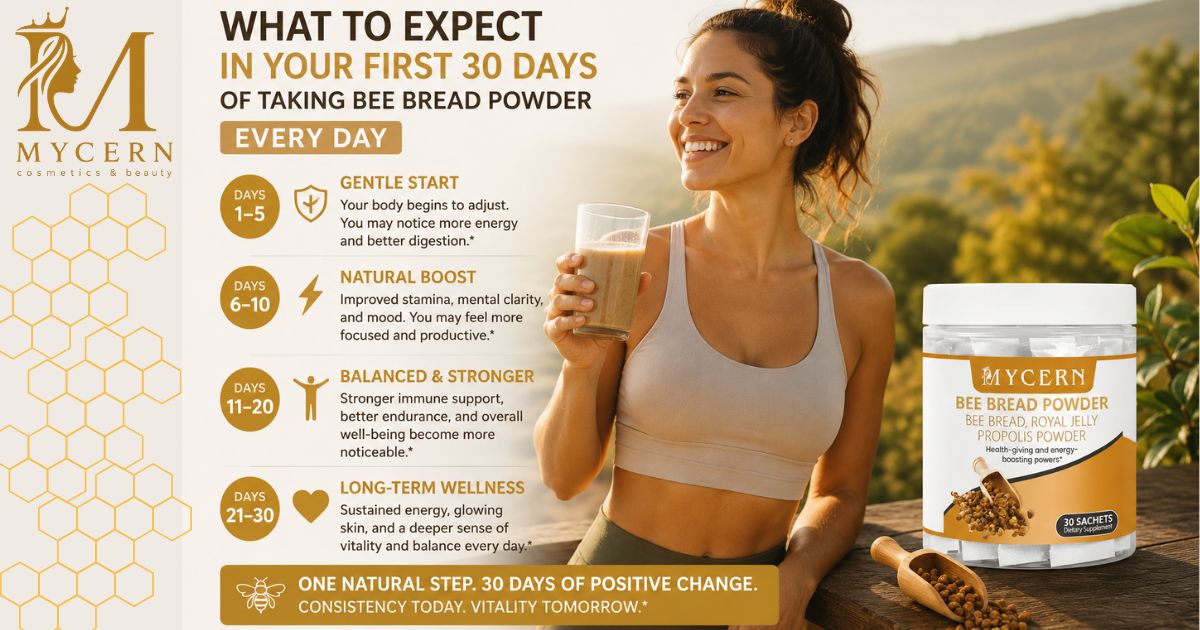
Those are completely reasonable questions. Most wellness supplements are sold on vague promises and after-photos. What people rarely get is an honest, week-by-week picture of what the experience actually looks like the early shifts, the slower changes, and what to keep an eye on as the weeks pass.
That's what this guide is for. We've mapped out the first 30 days in realistic detail, grounded in the biology of what bee bread does in your body and when. No hype, no guarantees just a clear, practical timeline so you know what you're starting.
MyCern is a US-based wellness brand creating research-supported, doctor-reviewed educational content.
A steady foundation for your immune system starts with the right daily support.
MyCern Bee Bread Powder is formulated to address cellular wellness and immune resilience at the root — not just the surface. If the timeline below sounds like what you've been looking for, this is where to begin.
Shop Now →What Makes Bee Bread Different from Regular Bee Pollen?

Before we get into the timeline, it helps to understand why bee bread behaves differently from standard bee pollen because the two are often confused, and the distinction really does matter.
Bee bread is what happens when bees pack fresh pollen into honeycomb cells, layer it with honey, nectar, and their own secretions, and leave it to ferment. Over several days, lactic acid bacteria and natural yeasts break down the pollen's tough outer cell walls the same walls that make raw pollen largely indigestible to the human gut.
The result is a fermented food with significantly higher nutrient bioavailability than its raw counterpart. A 2015 review published in Evidence-Based Complementary and Alternative Medicine found that the fermentation process increases free amino acids, polyphenol content, and antioxidant activity compared to unfermented pollen. Your body can actually access what's inside.
That bioavailability is the reason the timeline below works the way it does. You're not waiting for your digestive system to crack open pollen grains the work has already been done.
Days 1–7: Your Body Gets Acquainted
The first week is the adjustment phase. You won't feel dramatic changes yet and you shouldn't. What's happening is more like a quiet recalibration than a sudden transformation.
What you might notice
A mild but real lift in energy is the most commonly reported early shift. Bee bread is rich in B vitamins B1, B2, B3, B6, and folate which are essential cofactors in the metabolic pathways that convert food into ATP, your body's cellular fuel. If your baseline B vitamin levels have been suboptimal (which is common, even in people who eat reasonably well), this early replenishment can produce a noticeable steadying of daily energy within just a few days.
Some people also notice mild, temporary digestive changes in this first week a little more activity than usual, or a slightly different bathroom rhythm. This is the fermentation cultures and enzymes in bee bread beginning to interact with your gut microbiome. It's a normal sign that things are shifting. For most people, it settles within three to five days.
What's happening under the surface is arguably more significant: zinc, magnesium, selenium, and the full suite of bee bread's micronutrients are being absorbed and distributed to tissues that may not have been optimally nourished for some time. The visible results come later, but this early replenishment is what makes them possible.
Days 8–21: Your Gut Starts to Shift
Weeks two and three are often the most noticeably eventful part of the first month. This is when the gut microbiome changes that began in week one start to produce results you can actually feel.
Less bloating, better digestion
The polyphenols and probiotic organisms in fermented bee bread have been studied for their role in supporting gut barrier integrity and microbiome diversity. As beneficial bacterial populations grow, the inflammatory strains that compete with them get crowded out. For many people, this translates into noticeably less post-meal bloating, reduced gas, and more comfortable digestion overall.
If you've been using a food diary or symptom tracker, this is the phase where the patterns tend to become clear. Meals that used to leave you uncomfortable may start feeling easier.
Mood and mental clarity
The gut-brain axis the bidirectional communication network linking your digestive system to your central nervous system is highly sensitive to microbiome composition. As your gut environment improves, some users report a subtle but real improvement in mood stability, reduced afternoon irritability, and a general sense of mental steadiness. This isn't a dramatic effect for most people, but it's one of the changes that tends to accumulate quietly over weeks two and three before users notice it in retrospect.
The B vitamins and amino acids in bee bread including tryptophan, a direct precursor to serotonin may also contribute to this shift independently of the gut-brain axis.
Want to understand more about how bee bread may support your immune system through the gut? This article goes deeper on the science behind bee bread and immunity.
The science is clear. Your next step doesn't have to be complicated.
MyCern Bee Bread Powder brings together fermented pollen, naturally occurring probiotics, and a full spectrum of bioavailable micronutrients — the compounds most studied for gut health, immune resilience, and sustained energy. No fillers. No overstatements. Just what the research supports.
Shop Now →Days 22–30: The Compounding Phase
By the start of week four, you're no longer in adjustment mode. The changes from the first three weeks are compounding, and the picture of how bee bread is affecting you starts to come into sharper focus.
Immune resilience you can feel
This is often the phase where people describe feeling quietly stronger not in a dramatic way, but in the sense of being less knocked around by the stressors that used to drain them. Seasonal sniffles that would usually turn into a week-long slog may pass more quickly. The mid-afternoon energy dip that used to derail productivity may be noticeably less severe.
The immune system improvements at this stage are the result of multiple converging factors: a healthier gut lining allowing fewer inflammatory triggers into the bloodstream, improved antioxidant enzyme activity supported by bee bread's selenium and quercetin content, and better-nourished immune cells including natural killer cells and T-lymphocytes.
Mental clarity and steady energy
Many users finishing their first 30-day run describe the mental changes as the most unexpected surprise. The reduction in what's commonly called brain fog that vague cognitive sluggishness that makes focus feel effortful appears to be driven by a combination of improved gut-brain signalling, reduced systemic inflammation, and better cellular energy metabolism.
It doesn't arrive all at once. It's more like the background noise of daily fatigue and mental cloudiness slowly decreases, until one day you realise it's been quieter than usual for a while.
Your 30-Day Timeline at a Glance
| Days | Primary Phase | What May Happen |
|---|---|---|
| 1–7 | Metabolic priming | Mild energy lift, brief digestive adjustment, micronutrient absorption begins |
| 8–14 | Gut microbiome shift | Reduced bloating, more regular digestion, early mood improvements |
| 15–21 | Gut-brain axis activation | Steadier mood, improved cognitive clarity, skin changes for some |
| 22–30 | Immune reinforcement | Greater resilience, sustained mental clarity, more even daily energy |
| 30–90 days | Cellular wellness deepening | Continued antioxidant support, skin improvements, long-term immune calibration |
Results may vary depending on individual factors including baseline nutrition, health status, and consistency of use. The timeline above reflects what some users report it isn't a guarantee.
How to Get the Most Out of Your First 30 Days
The single biggest factor in whether the timeline above applies to you is consistency. Bee bread powder isn't a one-dose-and-done supplement it works by accumulation. Missing days, especially in the first two weeks, can blunt the early gut microbiome shifts that drive so much of what follows.
A few practical things that help: take it in the morning with a light meal rather than on an empty stomach. Mix it into cool or room-temperature water, a smoothie, or yoghurt the beneficial enzymes are sensitive to temperatures above 40°C, so hot drinks aren't ideal. In the first week, starting with a smaller amount (around half a teaspoon) gives your gut time to adjust before increasing to a full serving.
And drink water. The probiotic cultures and enzymes in bee bread function more effectively when you're well-hydrated throughout the day.
When to See a Doctor
Supplements may support general wellness, but they aren't a substitute for medical care. Speak with a qualified healthcare professional before starting if any of the following apply to you:
- You have a known allergy to bee products, pollen, or honey
- You're pregnant, breastfeeding, or planning to become pregnant
- You're currently taking prescribed medication, particularly immunosuppressants or anticoagulants
- You have a diagnosed autoimmune or gastrointestinal condition
- You're under 18, or considering this supplement for a child
If you develop an unexpected reaction after starting skin changes, digestive distress that doesn't resolve within the first week, or any symptom that concerns you stop use and consult your doctor. Always let your healthcare provider know about any new supplements you're taking.
Frequently Asked Questions
How does bee bread powder actually work in the body?
Bee bread is fermented bee pollen — the fermentation process breaks down the tough outer walls of pollen grains, making the nutrients inside far more bioavailable to your digestive system than raw pollen. Once absorbed, the wide spectrum of vitamins, minerals, amino acids, and polyphenols it contains may support multiple body systems simultaneously: gut microbiome balance, antioxidant defence, immune function, and cellular energy metabolism. Research suggests the naturally occurring probiotic organisms from the fermentation process also interact with your gut environment directly.
How long does it take to notice results from MyCern Bee Bread Powder?
Some people notice the first subtle shifts a small lift in energy, or a change in digestion within the first five to seven days. More meaningful changes, particularly around gut health and immune resilience, typically become clearer between two and four weeks of consistent daily use. Results may vary depending on individual factors including baseline health, nutrition, and consistency. Some users take six to eight weeks to notice the changes that others notice by week three.
Is it safe to take bee bread powder every day?
For most healthy adults, bee bread powder is generally well-tolerated as a daily supplement. It's a whole-food product rather than an isolated compound, which means the risk of overdose or adverse interaction is low at recommended serving sizes. That said, individual responses vary if you have any concerns, or if you're taking other supplements or medications, consult your healthcare provider before starting.
What's the recommended dose, and when should I take it?
The standard approach is to begin with a smaller amount around half a teaspoon in the first week to allow your gut time to adjust, then increase to a full serving (typically one teaspoon) from week two onwards. Morning use, mixed into cool water, a smoothie, or yoghurt, tends to work well for most people. Avoid combining with hot liquids, as high temperatures may degrade some of the heat-sensitive enzymes and nutrients. Always follow the serving guidance on your specific product label.
Who should avoid bee bread powder?
Anyone with a known allergy to bee products, pollen, or honey should not take bee bread powder without medical guidance, as allergic reactions are possible. Bee bread isn't recommended for children under 12 without professional advice. Pregnant or breastfeeding women should consult their doctor before use. If you're on prescribed medication especially blood thinners or immunosuppressants check with your healthcare provider first. When in doubt, consult your healthcare provider before starting any new supplement.
The Bottom Line
Your first 30 days with bee bread powder are less about a dramatic transformation and more about laying a genuinely solid nutritional foundation. The early energy shifts, the gut improvements through weeks two and three, the quiet strengthening of immune resilience in week four these changes are real, but they're gradual. That's the nature of whole-food nutrition.
The people who get the most from bee bread are the ones who commit to it past the point where they'd normally give up on a supplement. If you track how you feel, stay consistent, and give your body the full month, the picture that emerges at day 30 tends to be surprisingly clear.
Explore MyCern Bee Bread Powder and if you want to understand the immune science behind it in more detail, the research is worth reading.
Every batch of MyCern Bee Bread Powder is independently third-party tested by Eurofins, one of the world's largest and most respected testing networks. Testing covers heavy metals and microbiological safety, along with composition and active-ingredient verification to confirm the product's potency. MyCern Bee Bread Powder is also FDA compliant for the US market. We believe quality should be something you can verify, not just something a brand claims.
Which MyCern supplement fits your wellness goals?
Answer 5 quick questions and our Supplement Advisor will recommend the right formula for your age, lifestyle, and priorities. Free, personalised, no commitment.
Take the Quiz →References
- Mărgăoan R, Stranț M, Varadi A, et al. Bee Collected Pollen and Bee Bread: Bioactive Constituents and Health Benefits. Antioxidants (Basel). 2019;8(12):568. doi:10.3390/antiox8120568 This review documents the enhanced antioxidant activity and polyphenol content of fermented bee bread versus raw pollen, directly relevant to the bioavailability discussion in this article.
- Kieliszek M, Piwowarek K, Kot AM, Błażejak S, Chlebowska-Śmigiel A, Wolska I. Pollen and bee bread as new health-oriented products: a review. Trends in Food Science & Technology. 2018;71:170-180. doi:10.1016/j.tifs.2017.10.021 Summarises compositional data on bee bread including amino acids, vitamins, and minerals — the nutritional basis for the energy and metabolic claims discussed in the Days 1–7 section.
- Cryan JF, O'Riordan KJ, Cowan CSM, et al. The Microbiota-Gut-Brain Axis. Physiological Reviews. 2019;99(4):1877-2013. doi:10.1152/physrev.00018.2018 A comprehensive review of the gut-brain axis mechanisms referenced in the Days 8–21 section, including the role of microbiome composition in mood regulation and cognitive function.
- Cerdá B, Pérez M, Pérez-Santiago JD, Tornero-Aguilera JF, González-Soltero R, Larrosa M. Gut Microbiota Modification: Another Piece in the Puzzle of the Benefits of Physical Exercise in Health? Frontiers in Physiology. 2016;7:51. doi:10.3389/fphys.2016.00051 Supports the role of microbiome diversity in systemic health outcomes, underpinning the gut-to-immune-resilience connection outlined in the Days 22–30 section.
- Nair R, Maseeh A. Vitamin D: The "sunshine" vitamin. Journal of Pharmacology & Pharmacotherapeutics. 2012;3(2):118-126. doi:10.4103/0976-500X.95506 Contextualises the immune-supportive role of vitamin D, one of the fat-soluble vitamins present in bee bread and referenced in the immune reinforcement phase of this article.


