

Medically reviewed by Dr. Donika Vata, MD
I used to be the person who grabbed whatever immune supplement was on sale at the pharmacy. Vitamin C one month, zinc the next, maybe some echinacea when flu season hit. None of it felt like it was doing much. Then a friend handed me a small bag of something golden-brown and grainy and told me it was bee bread. I had no idea what that meant. But I looked it up, started reading the research, and what I found surprised me. Not because bee bread is some miracle cure. It isn't. But because the science behind it is more interesting than almost anything else sitting on the supplement shelf. So here's what the peer-reviewed literature actually says about bee bread powder immune support and why this particular whole food deserves a closer look.
Meet Bee Bread Powder — nature's most complete skin food.
Packed with enzymes, antioxidants, and B vitamins. See why glowing skin starts from within.
Shop MyCern Bee Bread →What Is Bee Bread?
Bee bread starts as pollen, but it doesn't stay that way for long. Worker bees collect pollen from flowers, bring it back to the hive, and pack it into honeycomb cells. They mix in their own salivary enzymes and a bit of nectar, then seal the cells with honey. What happens next is a natural lactic acid fermentation, driven largely by Lactobacillus and other beneficial bacteria. Over days to weeks, this process transforms raw pollen into something fundamentally different (Bakour et al., 2022).

Why does that matter?
Because raw pollen has a tough outer shell that the human gut struggles to break down. Fermentation cracks that shell open. That single difference is why bee bread and bee pollen aren’t really the same product, even though people often use the terms interchangeably. The result is a product packed with free amino acids, fatty acids, vitamins, minerals, organic acids, polyphenols, and living microorganisms. Researchers have catalogued more than 300 distinct compounds in bee bread samples collected from different regions (Bakour et al., 2022).
For a fuller breakdown of bee bread’s nutrition and health effects, the profile is worth exploring. But the short version is this: bee bread is pollen that bees have already pre-digested for you, making its nutrients dramatically more accessible.
Bee Bread Powder Immune Support: Science-Backed Benefits
Antioxidant Protection
The antioxidant profile of bee bread is one of the most studied aspects of this food. A 2024 study published in Antioxidants analyzed bee bread samples and found significant concentrations ofphenolic compounds. Flavonoids showed up in substantially higher quantities than phenolic acids (Oprea et al., 2024). That’s relevant because flavonoids, including quercetin derivatives and related polyphenols, are the compounds responsible for neutralizing free radicals. Free radicals are unstable molecules that damage cells and, over time, wear down the body’s repair systems.
Here’s why this connects to immunity. When oxidative stress stays low, the immune system doesn’t have to spend its energy cleaning up cellular damage. It can focus on what it’s supposed to do. That same reduced oxidative burden may also explain why some people report feeling more natural energy from bee bread. Nobody is claiming bee bread replaces a balanced diet or good sleep habits. But the antioxidant density is real, and it’s backed by analytical chemistry, not marketing copy.
Antimicrobial Defense
The same 2024 Antioxidants study found something else that caught researchers off guard. Bee bread extracts showed antimicrobial activity against every pathogenic strain the team tested, including Salmonella typhi, Candida albicans, and Candida glabrata (Oprea et al., 2024). Even more notable, the researchers reported for the first time that bee bread could inhibit microbial adhesion to surfaces. That mechanism matters because adhesion is how many pathogens gain a foothold in the body.
A comprehensive review published in Antibiotics confirmed these patterns across multiple studies, documenting antifungal and antibacterial effects in laboratory settings (Bakour et al., 2022). These are in vitro findings. They don’t prove the same thing happens inside a living human body. But they do suggest that bee bread’s complex chemistry operates through mechanisms that a single-ingredient supplement simply can’t replicate.
Immune Stimulation Through Probiotics
This is where things get especially interesting. A 2024 study in Pharmaceuticals looked at the microbial communities living inside bee bread at different stages of maturation. The researchers found that these communities shift and change during fermentation, eventually stabilizing into a diverse, functionally active ecosystem (Mossialos et al., 2024). They isolated 309 bacterial strains and tested them individually. Dozens showed direct antibacterial activity against serious pathogens like Staphylococcus aureus and Klebsiella pneumoniae.
The real finding, though, was the comparison. Artificially fermented samples showed stronger antibacterial activity than fresh, unfermented pollen (Mossialos et al., 2024). That tells us something important: the bacteria themselves are contributing to the product’s bioactivity. It’s not just the nutrients. The living microbial community is doing real work.
A 2022 review in Frontiers in Nutrition connects this to broader health outcomes. Probiotics found in bee bread have been associated with gastrointestinal support, cholesterol reduction, and immune system stimulation (Barta et al., 2022). The bacteria produce bacteriocins and short-chain fatty acids that lower gut pH and create a more hostile environment for harmful microbes. For immunity, that kind of gut-level support matters more than most people realize.
Bee Bread Powder Immune Support and Your Gut
Roughly 70 percent of immune cells live in the gut-associated lymphoid tissue. That fact alone should change how we think about immune supplements. Bee bread’s probiotic bacteria, combined with its organic acids and prebiotic fibers, may help support this gut-immune connection. The lactic acid bacteria in bee bread produce enzymes like hemicellulases, amylases, and proteinases, which can aid nutrient breakdown and absorption (Mossialos et al., 2024).
A well-functioning gut microbiome regulates immune responses more effectively, keeps inflammation in check, and resists colonization by harmful organisms. Human clinical trials on bee bread specifically are still limited. But the in vitro and in vivo evidence gathered so far makes a strong case for bee bread powder immune support through whole-food nutrition rather than isolated compounds.

Ready to put this knowledge to work?
MyCern Bee Bread Powder delivers the exact nutrients your skin craves — fermented, bioavailable, and ready to absorb. No fillers, no shortcuts.
Shop Bee Bread Powder → Learn the ingredientsWhy Latvia?
Geography matters when it comes to bee bread quality. Latvia sits along the Baltic, surrounded by old-growth forests and meadows that have seen minimal chemical agriculture. The cold northern climate creates a short but intense summer foraging season, which means bees visit dozens of wild flower species in a compressed timeframe. That produces a remarkably diverse pollen profile.
Latvian beekeepers have practiced traditional hive management for generations, allowing fermentation to complete naturally without artificial shortcuts. The result is a cleaner, more nutrient-dense bee bread powder than what mass-production methods typically deliver.
How to Use Bee Bread Powder Immune Support Daily
One teaspoon a day. That's it. Take it in the morning for best absorption. You can stir it into a smoothie, mix it into yogurt, or sprinkle it over oatmeal. Some people blend it with warm water and honey, which works fine as long as the water isn't boiling. High heat can degrade some of the bioactive compounds and kill off the beneficial bacteria you're trying to consume.
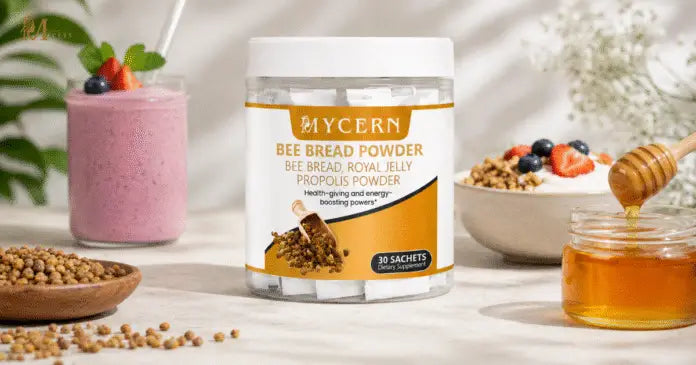
If you've never tried bee products before, start with half a teaspoon and work your way up. Anyone with a known bee or pollen allergy should talk to their doctor first. MyCern Bee Bread Powder comes in single-serve sachets sourced directly from Latvian apiaries, gently processed to keep the full range of nutrients and live cultures intact. One to two sachets in a morning smoothie is the easiest way to make this part of your routine.

If you've been researching bee bread powder immune support and wondering whether the claims hold up, the short answer is: the science is still developing, but what's there is grounded in real chemistry and real biology. Antioxidants, antimicrobial compounds, probiotics, and hundreds of bioactive nutrients working together in a single whole food. That's not a marketing claim. That's what the peer-reviewed literature describes. If you want to try it for yourself, MyCern Bee Bread Powder is a good place to start — sourced from Latvian apiaries, minimally processed, and designed to keep all of those living compounds intact.
Every batch of MyCern Bee Bread Powder is independently third-party tested by Eurofins, one of the world's largest and most respected testing networks. Testing covers heavy metals and microbiological safety, along with composition and active-ingredient verification to confirm the product's potency. MyCern Bee Bread Powder is also FDA compliant for the US market. We believe quality should be something you can verify, not just something a brand claims.
Not sure which MyCern product is right for you?
Let our Supplement Advisor find your perfect match. Answer 5 quick questions and get a personalised recommendation — free, no commitment.
Try the Supplement Advisor →When to Speak With a Doctor
Bee bread powder is a food-based supplement and is generally well-tolerated, but it's not a substitute for medical care. Speak with a healthcare professional before using it if you have a known bee, pollen, or honey allergy, if you are pregnant or breastfeeding, if you take prescription medication, or if you manage a chronic health condition. Stop use and seek medical advice if you notice itching, swelling, difficulty breathing, or any other signs of an allergic reaction.
Frequently Asked Questions
What is bee bread, and how is it different from bee pollen?
Bee bread is flower pollen that worker bees pack into honeycomb with their enzymes and a little nectar, where it goes through natural lactic-acid fermentation. That fermentation cracks open pollen's tough outer shell — the key difference from raw bee pollen — which makes the nutrients far more accessible to your gut. The result is a whole food with free amino acids, vitamins, minerals, polyphenols, and living microorganisms.
How might bee bread support the immune system?
Research suggests it works on several fronts rather than through a single nutrient. Lab studies have documented bee bread's antioxidant and antimicrobial activity, and it naturally contains probiotic bacteria formed during fermentation. Because roughly 70% of immune cells live in gut-associated tissue, that gut and probiotic support may be where much of the benefit comes from. Many of these are in vitro findings, so individual results may vary.
How do you take bee bread powder?
About one teaspoon a day, ideally in the morning for absorption. Stir it into a smoothie, yogurt, or oatmeal, or mix it with warm — not boiling — water and honey, since high heat can degrade the bioactive compounds and kill the beneficial bacteria. If you're new to bee products, start with half a teaspoon and build up.
Is bee bread powder safe, and who should avoid it?
It's generally well-tolerated as a whole food, but it isn't right for everyone. Anyone with a known bee or pollen allergy should avoid it, and people who are pregnant or breastfeeding, taking prescription medication, or managing a medical condition should consult their healthcare provider before trying it. Stop use and seek medical advice if you notice any signs of an allergic reaction.
Is bee bread better than regular bee pollen for immune support?
For nutrient accessibility, the fermentation gives bee bread an edge. Because the process breaks down pollen's hard shell, the amino acids, polyphenols, and other compounds are easier for the body to absorb than those in raw pollen. Some lab research has also found fermented samples show stronger antibacterial activity than fresh pollen, suggesting the living microbial community adds to the effect.
References
Medical Disclaimer: This article is for educational and informational purposes only and does not constitute medical advice, diagnosis, or treatment. Always consult a qualified healthcare professional before starting any supplement or wellness program.


