

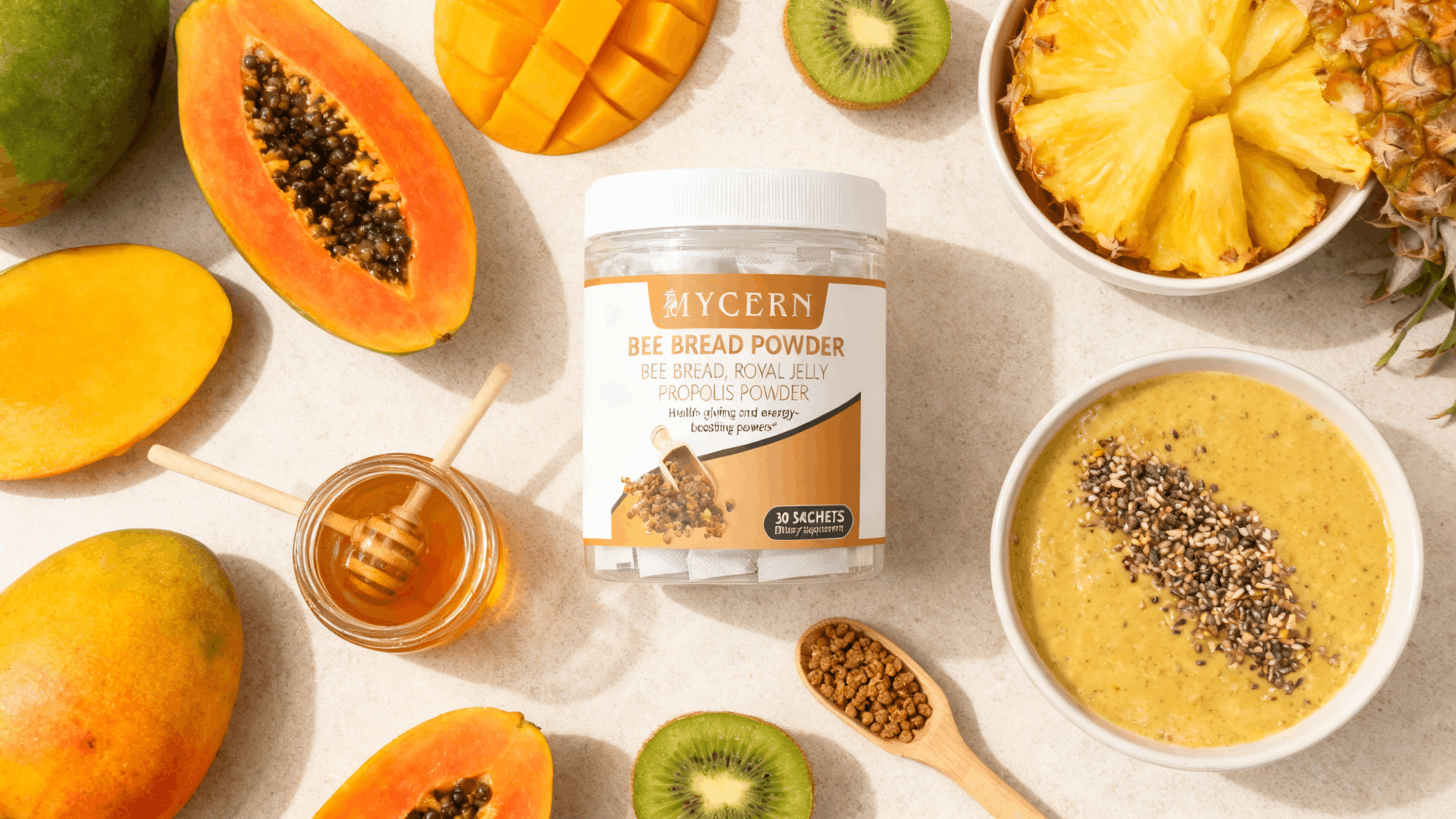
Looking for a natural way to support digestion and gut health?
Try MyCern Bee Bread Powder
Do you often feel uncomfortably full, bloated, or sluggish after meals? Many people blame “sensitive stomachs,” but digestion often depends on enzyme activity. Bee bread, a naturally fermented superfood, contains enzymes and beneficial compounds that may support digestion and nutrient absorption. Your body naturally produces digestive enzymes, but many foods also contribute additional support.
Your body naturally produces digestive enzymes, but many foods also contain their own enzymes that help break down nutrients. Eating foods with digestive enzymes can improve nutrient absorption, reduce bloating, and support your overall digestive health.
Modern diets, packed with cooked, processed, and pasteurized foods, contain almost no active enzymes. Our ancestors relied on raw, fermented, and minimally processed foods to help digestion naturally. Today, the pancreas and digestive system work overtime to compensate, which can lead to discomfort, fatigue, and nutrient malabsorption. Understanding enzyme-rich foods, how they differ from digestive enzymes in food vs those your body produces, and when to complement them with supplements forms the foundation for better digestive health.
This article explores:
-
The difference between food enzymes and digestive enzymes your body produces
-
How natural enzymes for digestion break down carbs, proteins, and fats
-
The best enzyme foods list including tropical fruits, fermented foods, and bee bread
-
How fermented foods enzymes like those in MyCern Bee Bread Powder enhance nutrient absorption
-
When digestive enzyme supplements may be beneficial
Understanding Food Enzymes vs Digestive Enzymes

Your body produces key digestive enzymes:
-
Amylase (saliva and pancreas) – breaks down carbohydrates
-
Protease (stomach and pancreas) – breaks down proteins
-
Lipase (mainly pancreas) – breaks down fats
Unlike single enzyme sources, bee bread provides a combination of naturally occurring enzymes along with fermentation derived probiotics. This makes it a broader digestive support option compared to many individual enzyme-rich foods. These enzymes are essential, but production can decline with age, stress, poor diet, or chronic conditions. This is why digestive enzyme supplements are sometimes necessary.
Natural enzymes for digestion from food work alongside your body’s enzymes. They start breaking down nutrients immediately in the stomach, reducing the burden on your pancreas and improving nutrient absorption. The caveat: enzymes are destroyed by heat. Cooked or processed foods often contain no active enzymes, so raw, fermented, and minimally processed foods are key.
How Enzymes Break Down Food
Carbohydrate Digestion: Amylase in Action
Amylase enzymes split starches into simple sugars. Foods like mangoes, bananas, honey, and fermented items contain natural amylase, starting carbohydrate digestion early. This reduces gas, bloating, and improves nutrient uptake.
Protein Digestion: Protease Power
Protease enzymes split proteins into amino acids. Papaya contains papain, pineapple contains bromelain, and figs contain ficin—all helping protein digestion and easing stomach load. Including these foods that help digestion is especially helpful after protein-heavy meals.
Fat Digestion: Lipase for Lipids
Lipase enzymes break down fats into fatty acids and glycerol. Avocados and some fermented foods naturally contain lipase, aiding fat digestion and improving absorption of vitamins A, D, E, and K.
The Best Enzyme-Rich Foods: Your Essential List
Tropical Fruits: Nature’s Enzyme Powerhouses
-
Pineapple – bromelain (protease)
-
Papaya – papain (protease)
-
Mango – amylase (carbohydrate digestion)
-
Kiwi – actinidin (protein digestion)
Always consume these raw to preserve enzyme activity. Fresh or frozen works best.
Fermented Foods: Enzyme Factories
Fermentation increases enzyme content. Foods like kimchi, sauerkraut, kefir, miso, and tempeh contain fermented foods enzymes that support both protein and carbohydrate digestion. Fermentation also improves nutrient bioavailability and promotes a healthy gut microbiome.
Raw Honey
Raw honey contains amylase, invertase, and small proteases that support carbohydrate digestion. Avoid processed or heated honey, which loses enzyme activity.

Bee Bread: Nature’s Concentrated Enzyme Superfood
Bee bread is fermented bee pollen stored in honeycomb, naturally enriched with digestive enzymes during fermentation. It contains:
-
Amylase (carbs)
-
Protease (proteins)
-
Lipase (fats)
-
Additional B vitamins, amino acids, and beneficial acids supporting digestion and nutrient absorption
MyCern Bee Bread Powder provides concentrated, highly bioavailable enzyme support. Unlike raw bee pollen, the fermentation process breaks down the tough outer shell, making enzymes and nutrients easier to absorb.
In addition to digestive enzymes, bee bread also contains naturally occurring probiotics and micronutrients that support gut balance and long-term digestive efficiency.
Just 1–2 teaspoons daily can support digestion during heavy meals and enhance your body’s natural enzyme activity.
Support your digestion naturally with MyCern Bee Bread Powder
Foods That Help Digestion Beyond Enzymes
-
Fiber – Vegetables, fruits, legumes, and whole grains promote regular bowel movements and feed gut bacteria.
-
Probiotics – Yogurt, kefir, kimchi, and sauerkraut help the gut produce its own digestive enzymes, complementing enzyme-rich foods.
How to Improve Digestion Naturally
Raw Food Factor
Include raw fruits, vegetables, herbs, and sprouted seeds. Even small amounts boost enzyme intake. Add raw elements to salads, breakfast, and snacks.
Timing & Combining Foods
Consume enzyme-containing foods at the start of meals. Chew thoroughly to activate salivary amylase and enhance overall digestive efficiency.
Strategic Supplementation
For heavier meals or during periods of digestive stress, supplement with MyCern Bee Bread Powder. Combined with enzyme-rich foods, this supports both immediate digestion and long-term gut health.

When Digestive Enzyme Supplements Are Helpful
While foods with digestive enzymes are excellent, some situations call for extra support:
-
Persistent bloating, gas, or discomfort
-
Visible undigested food in stool
-
Age-related enzyme decline (common over 50)
-
Conditions like pancreatic insufficiency or IBS
Digestive enzyme supplements provide concentrated doses of amylase, protease, and lipase. Pairing them with enzyme-rich foods and MyCern Bee Bread Powder creates a comprehensive approach, supporting daily digestion while addressing acute digestive challenges.
Practical Guidelines for Enzyme-Rich Eating
-
Start meals with raw fruits or salads
-
Include at least one fermented food daily
-
Consume raw tropical fruits for protease and amylase
-
Take 1–2 teaspoons of MyCern Bee Bread Powder for concentrated enzyme support
-
Chew thoroughly to activate salivary enzymes
-
Incorporate lightly steamed vegetables to preserve enzyme activity
-
Support your microbiome with probiotic foods
FAQs
Q1: What foods contain digestive enzymes?
A: Tropical fruits (papaya, pineapple, mango, kiwi), raw honey, fermented foods (kimchi, kefir, miso, sauerkraut), raw sprouted seeds, and bee bread contain natural enzymes supporting digestion.
Q2: How do food enzymes differ from digestive enzyme supplements?
A: Food enzymes provide natural enzymatic support and nutrients, starting digestion early, while supplements offer concentrated doses for specific digestive deficiencies.
Q3: Can MyCern Bee Bread Powder help with digestion?
A: Yes. It provides concentrated, bioavailable natural enzymes including amylase, protease, and lipase, supporting digestion and nutrient absorption while promoting gut health.
Q4: How to improve digestion naturally?
A: Eat raw and fermented enzyme-rich foods, chew thoroughly, support gut microbiome with probiotics, include fiber, and use concentrated enzyme sources like MyCern Bee Bread Powder when needed.
Compared to common enzyme foods like pineapple or papaya, bee bread offers a more complete digestive profile by combining enzymes, probiotics, and enhanced nutrient bioavailability through fermentation.

Conclusion
Incorporating foods with digestive enzymes into your diet supports comfortable and efficient digestion. Along with fruits like pineapple and papaya and fermented foods like kefir, MyCern Bee Bread Powder offers a natural and comprehensive way to support digestive health.
By combining enzyme-rich foods with mindful eating habits and targeted supplementation, you can improve nutrient absorption, reduce digestive discomfort, and maintain long-term gut health.
For a convenient and natural digestive support solution, explore MyCern Bee Bread Powder.
References
- Ianiro, G., Pecere, S., Giorgio, V., Gasbarrini, A., & Cammarota, G. (2016). Digestive enzyme supplementation in gastrointestinal diseases. Current drug metabolism, 17(2), 187-193.
- Bikheet, M. M., Abdel-Aleem, W. M., Shaban, M. M., & Galal, S. M. (2024). Duality Effect of Bee Products in Dealing with Yoghurt Starter, Probiotics and Food Borne Pathogenic Bacteria. Scientific Journal of Agricultural Sciences, 6(1), 166-184.
- Pavan, R., Jain, S., Shraddha, & Kumar, A. (2012). Properties and therapeutic application of bromelain: a review. Biotechnology research international, 2012(1), 976203.
-
Roxas, M. (2008). The role of enzyme supplementation in digestive disorders. Alternative medicine review, 13(4).


