

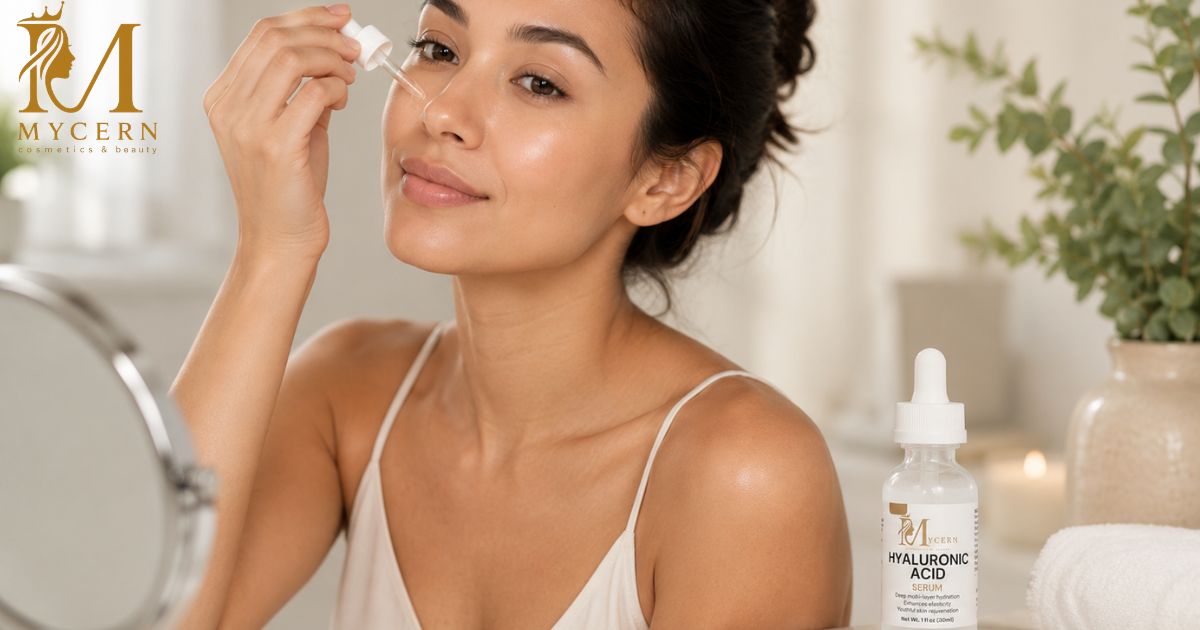
You've probably noticed it that creeping shift where your skin looks a little more tired than it used to, a little drier, maybe a little less "lit from within." Fine lines you could once dismiss now catch the light. Your complexion doesn't bounce back the way it did at 25. If any of that sounds familiar, the conversation about hyaluronic acid benefits for skin is one worth having because hydration is at the centre of almost everything that makes skin look young, and HA is one of the most studied ingredients for supporting it.
✓ Medically Reviewed by Dr. Donika Vata, MD
Reviewed for scientific accuracy and wellness education.
Last reviewed: May 2026
MyCern is a US-based wellness brand creating research-supported, doctor-reviewed educational content.
The ingredients behind visibly plumper, more hydrated skin.
MyCern Hyaluronic Acid Serum combines multiple molecular weights of hyaluronic acid in one clean, research-backed formula — designed to hydrate deeply and keep skin looking its best.
See What's Inside →What Hyaluronic Acid Actually Is

Hyaluronic acid isn't a lab-created chemical it's something your body makes naturally. It belongs to a group of molecules called glycosaminoglycans, and its main job is to hold water in your tissues. You'll find it concentrated in your skin, your joints, and the fluid surrounding your eyes.
In the skin, it sits in the extracellular matrix that scaffolding of proteins and molecules that supports your skin cells. Think of it as the gel that keeps everything plump and flexible. One gram of hyaluronic acid can hold up to six litres of water, which tells you a lot about why it matters so much for a youthful, hydrated appearance.
The catch is that our natural HA levels start declining in our mid-twenties. By the time most people reach their forties, the drop is significant. Less hyaluronic acid means less water retention in the skin and that's when things start to look and feel different. According to research published in Dermato-Endocrinology, the skin's capacity to retain moisture is a central factor in visible aging - not just genetics or sun damage.
Why Dehydrated Skin Ages Faster
It's easy to assume that wrinkles are purely structural something that happens to collagen and elastin over time. And while that's true in part, dehydration speeds up the visible signs of aging in ways that tend to get overlooked.
When skin loses moisture, it loses volume at a microscopic level. The surface becomes slightly uneven, fine creases form, and the complexion takes on a dull, flat quality that no amount of makeup quite corrects. Many of the lines people see especially around the eyes and forehead are dehydration lines, not true structural wrinkles. They disappear or soften significantly when hydration is restored.
Dehydrated skin also has a weakened barrier. The outermost layer of the skin the stratum corneum needs adequate moisture to function properly. When it's compromised, water evaporates faster (a process called transepidermal water loss, or TEWL), the skin becomes more reactive, and it heals more slowly. Over time, a chronically dehydrated barrier ages the skin faster than it otherwise would.
Hydrated Skin vs Dehydrated Skin: What Changes
| Characteristic | Well-Hydrated Skin | Dehydrated Skin |
|---|---|---|
| Light reflection | Even, radiant, luminous | Dull, flat, scattered |
| Fine lines | Less visible, softened | More pronounced, creased |
| Texture | Smooth, supple | Rough, tight, flaky |
| Elasticity | Bounces back quickly | Slow recoil, feels stiff |
| Barrier strength | Intact, protective | Compromised, reactive |
The "Plumping" Effect - What's Really Happening
When you apply a hyaluronic acid serum, the HA molecules draw moisture from the environment and from the deeper layers of your skin toward the surface. This rapid water-binding creates what dermatologists describe as a plumping effect and it's not marketing language. It's physiology.
Hydrated skin cells are physically fuller. When cells hold more water, the volume of the dermis and epidermis increases slightly. The surface becomes smoother, fine lines look shallower, and the complexion gains the kind of natural luminosity that's often called a "healthy glow." It's also why many people notice a difference with HA within hours the effect is visible and fast, even if maintaining it requires daily commitment.
Dermatologists consistently point out that well-hydrated skin reflects light more evenly. Dry skin scatters light unevenly across its rough surface, which makes texture and wrinkles more obvious. Hydrated skin, because it's smoother and more uniform, reflects light in a way that naturally softens the appearance of lines. If you're curious about the broader picture, our guide on what hyaluronic acid does for skin goes deeper into the mechanisms involved.
Not All Hyaluronic Acid Is the Same
Molecular weight matters more than most people realise. High molecular weight HA sits on the surface of the skin and creates an immediate smoothing effect it's what you feel when skin looks plumped right after applying a serum. Low molecular weight HA penetrates more deeply, supporting hydration at a structural level and contributing to longer-lasting results.
The best serums use both. Multi-weight formulas are widely considered the most effective approach because they address hydration at more than one layer. Sodium hyaluronate the salt form of hyaluronic acid is also commonly used because it's more stable and absorbs easily, which is why you'll see it listed on most quality HA product labels.
What Hyaluronic Acid May Support - By Skin Concern
Fine Lines and Early Wrinkles
Dehydration lines — the fine surface creases that worsen throughout the day — respond quickly to HA because they're caused by a lack of moisture rather than structural collagen loss. Some evidence suggests that regular topical HA use may reduce the depth of fine lines over time by keeping the skin consistently plump. It won't rebuild lost collagen, but it supports the environment in which collagen fibres work best.
Dryness and Flakiness
HA is a humectant it draws moisture in rather than just coating the surface. For dry skin, this means genuine hydration rather than temporary relief. It may help reduce the tight, uncomfortable feeling of severely dry skin and improve softness noticeably within a few days of consistent use.
Dullness
Dull skin is almost always dehydrated skin. Restoring moisture levels tends to bring back the natural radiance that disappears when the skin's surface becomes rough and uneven. HA doesn't add a "fake glow" it creates the conditions for genuine luminosity.
Oily and Acne-Prone Skin
This one surprises people. Oily skin is often dehydrated skin the sebaceous glands overproduce oil to compensate for lost moisture. Providing lightweight hydration through HA may help regulate that cycle. It's non-comedogenic, meaning it won't clog pores, and it's well-tolerated by most acne-prone skin types.
Sensitive and Mature Skin
HA is one of the gentlest actives available. It doesn't exfoliate, sensitise, or irritate which makes it suitable for reactive, rosacea-prone, and post-procedure skin. For mature skin types, where natural HA levels have dropped significantly, topical application may offer one of the most accessible ways to restore volume and plumpness to thinner, more creased skin.
You've done the research. This is what it points to.
MyCern Hyaluronic Acid Serum is formulated around the same science you just read — clean, multi-weight HA, independently tested, and built for daily use across all skin types.
Shop Now →Common Mistakes That Reduce Its Effectiveness
Applying it to completely dry skin. HA is a humectant it draws moisture from whatever's available. In a dry climate or after thoroughly towel-drying your face, it may actually pull moisture from deeper skin layers, leaving the surface feeling tighter than before. Apply it to slightly damp skin for best results.
Skipping the moisturiser. HA draws water in, but it needs an occlusive or emollient layer on top to seal it in. Without a moisturiser, that moisture will evaporate. Always follow your HA serum with a cream or facial oil.
Over-relying on exfoliants at the same time. Strong AHAs or daily retinol use alongside HA is fine in principle, but aggressive exfoliation strips the very surface HA is trying to hydrate. Balance them carefully HA works best when the skin barrier is intact. According to NIH-published clinical guidance on moisturisers and humectants, maintaining the skin barrier alongside humectant use produces significantly better outcomes than humectants alone.
Ingredients That Work Well Alongside It
Vitamin C - Apply this first, then HA on top. Vitamin C brightens and protects against oxidative stress; HA keeps the skin receptive and hydrated, improving absorption. It's one of the most effective pairings in a morning routine.
Ceramides - Ceramides form the lipid "mortar" between skin cells in the barrier. Combining them with HA is one of the most effective approaches to long-term skin barrier health. Look for moisturisers that include both.
Niacinamide - Vitamin B3 reduces visible pores, helps regulate oil production, and strengthens the barrier. It plays well with HA and tends to enhance the overall result of a hydration-focused routine.
Peptides - Peptides signal the skin to support collagen and elastin production. Paired with HA, they address both structural support and surface hydration — a particularly useful combination for anti-aging skincare. You can learn more about how these ingredients layer together in our article on building a hydration-first skincare routine with MyCern.
Myths Worth Clearing Up
"Hyaluronic acid exfoliates the skin." It doesn't. The word "acid" in its name has nothing to do with chemical exfoliation. It's a hydrator, full stop and one of the gentlest skincare ingredients in existence. AHAs and BHAs exfoliate; HA doesn't.
"It permanently removes wrinkles." Topical HA temporarily reduces the appearance of fine lines by keeping the skin hydrated. It doesn't permanently alter the skin's structure, and it won't replace the results of injectable treatments. Results depend entirely on consistent, daily use.
"Only dry skin types need it." Every skin type oily, combination, sensitive, acne-prone, and mature benefits from proper hydration. HA is lightweight, non-comedogenic, and suitable for everyone. According to research in the Journal of Clinical and Aesthetic Dermatology, even oily skin types showed improved barrier function and reduced oil production with consistent moisturiser use.
When to See a Doctor
Skincare can do a lot but it doesn't replace medical care. If you're experiencing any of the following, speak with a qualified healthcare professional before making changes to your routine:
- Persistent skin inflammation, redness, or rashes that don't resolve with gentle skincare
- Sudden, unexplained changes in skin texture or appearance
- Allergic reactions or unusual sensitivity to topical products
- Chronic dry skin that doesn't respond to over-the-counter moisturisers
- Any skin condition that has been previously diagnosed — always consult your dermatologist before introducing new actives
Skincare supplements and topical products may support general skin wellness, but they are not a substitute for a diagnosis or treatment plan from a qualified professional.
Frequently Asked Questions
How does hyaluronic acid actually work in the skin?
Hyaluronic acid is a naturally occurring humectant a molecule that attracts and holds water. When applied topically, it draws moisture from the environment and from deeper skin layers toward the surface, temporarily increasing the skin's water content. This creates a plumping effect that softens fine lines, improves texture, and restores a more radiant appearance. The body also produces HA naturally, though levels decline with age, making topical supplementation increasingly useful over time.
How long does it take to see results from hyaluronic acid?
The immediate plumping effect can often be seen within a few hours of first use — many people notice their skin looks smoother and more radiant the same day. For longer-term improvements in skin texture, elasticity, and barrier health, some people report noticeable changes within two to four weeks of consistent daily use. Results may vary depending on individual factors including skin type, existing hydration levels, and overall routine.
Is it safe to use hyaluronic acid every day?
Yes — hyaluronic acid is generally well-tolerated by all skin types, including sensitive, rosacea-prone, and acne-prone skin. It doesn't exfoliate, sensitise, or cause the kind of irritation associated with stronger actives like retinol or AHAs. Daily use — morning and evening — is both safe and recommended for best results. As always, consult your healthcare provider if you have any concerns or a pre-existing skin condition.
How should I use hyaluronic acid in my skincare routine?
Apply your HA serum after cleansing, while your skin is still slightly damp this gives the humectant molecules something to work with. Use 2–3 drops, press gently into the skin with your fingertips, then immediately follow with a moisturiser to seal the hydration in. In the morning, always finish with SPF. Using HA on completely dry skin in a very arid environment may have the opposite effect, so that damp-skin step genuinely matters.
Who should be cautious about using hyaluronic acid?
Topical hyaluronic acid is suitable for nearly everyone and side effects are uncommon individual responses vary, but adverse reactions are rare. However, if you're pregnant or breastfeeding, taking prescription medications for a skin condition, or managing a diagnosed dermatological condition, it's always worth checking with your doctor before introducing any new skincare active, including HA. When in doubt, patch-test on a small area of skin first and wait 24 hours.
Every batch of MyCern Hyaluronic Acid Serum is independently third-party tested by Eurofins, one of the world's largest and most respected testing networks. Testing covers heavy metals and microbiological safety, along with composition and active-ingredient verification to confirm the product's potency. MyCern Hyaluronic Acid Serum is also FDA compliant for the US market. We believe quality should be something you can verify, not just something a brand claims.
Which MyCern supplement fits your wellness goals?
Answer 5 quick questions and our Supplement Advisor will recommend the right formula for your age, lifestyle, and priorities. Free, personalised, no commitment.
Take the Quiz →References
- Papakonstantinou E, Roth M, Karakiulakis G. Hyaluronic acid: A key molecule in skin aging. Dermato-Endocrinology. 2012;4(3):253–258. doi:10.4161/derm.21923
This study documents the age-related decline in dermal hyaluronic acid and links reduced HA levels to the structural changes responsible for skin laxity and visible aging. Directly relevant to the mechanisms discussed throughout this article. - Ganceviciene R, Liakou AI, Theodoridis A, Makrantonaki E, Zouboulis CC. Skin anti-aging strategies. Dermato-Endocrinology. 2012;4(3):308–319. doi:10.4161/derm.22804
A comprehensive review of evidence-based anti-aging skincare strategies. Supports the article's discussion of hydration as a foundational component of youthful skin appearance. - Meckfessel MH, Brandt S. The structure, function, and importance of ceramides in skin and their use as therapeutic agents in skin-care products. Journal of the American Academy of Dermatology. 2014;71(1):177–184. doi:10.1016/j.jaad.2014.01.977
Establishes the role of ceramides in skin barrier function and their synergy with humectants like hyaluronic acid. Relevant to the article's guidance on pairing HA with ceramides. - Baumann L. Skin ageing and its treatment. Journal of Pathology. 2007;211(2):241–251. doi:10.1002/path.2098
Covers intrinsic and extrinsic aging mechanisms in detail. Supports the article's explanation of how collagen, elastin, and HA decline together to produce the visible signs of skin aging. - Sethi A, Kaur T, Malhotra SK, Gambhir ML. Moisturizers: The slippery road. Indian Journal of Dermatology. 2016;61(3):279–287. doi:10.4103/0019-5154.182427
Provides a detailed look at how humectants, emollients, and occlusives work together — supporting the article's guidance on the importance of sealing HA with a moisturiser.
Love this? Read more: What Does Hyaluronic Acid Do for Skin? A Science-Based Guide to Deep Hydration


