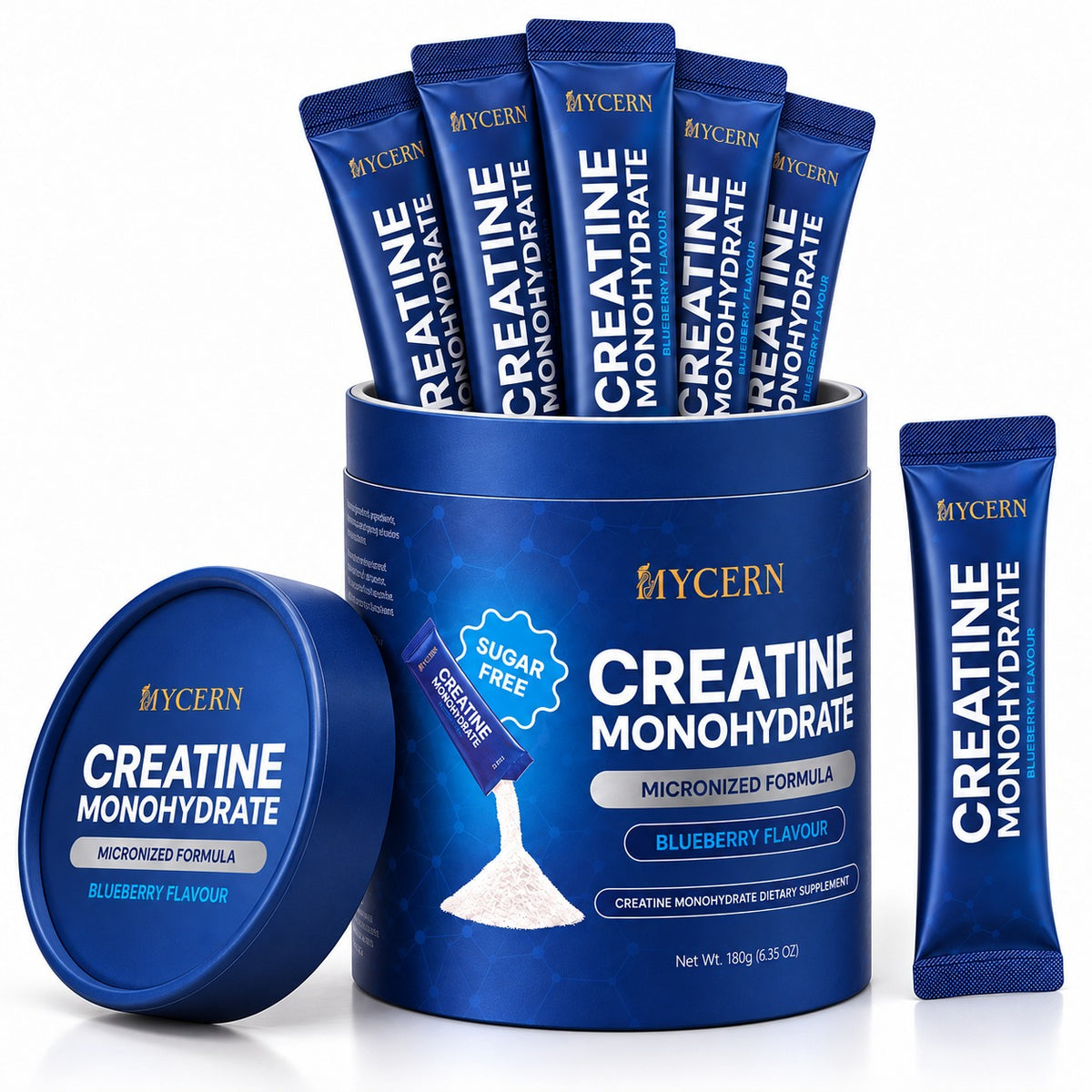

Muscle Recovery and Injury Prevention: How Creatine Mitigates Exercise-Induced Damage
You push through the final set of heavy squats, rack the bar, and catch your breath, feeling that familiar combination of fatigue and accomplishment. But over the next 48 hours, micro-tears in your muscle fibers launch an inflammatory cascade that can leave you sluggish and sore. Proper Muscle Recovery and Injury Prevention protocols are essential if you want to get back to peak performance without risking overuse injuries. Creatine monohydrate is widely recognized for strength, but its role in reducing cellular damage and speeding up recovery between grueling sessions is where it truly shines.
MyCern is a US-based wellness brand creating research-supported, doctor-reviewed educational content.
Optimize Your Recovery Window
Discover target supplements formulated to support cellular energy, muscle hydration, and rapid post-workout replenishment.
Shop Now →The Cellular Toll of High-Intensity Training: Membrane Leakage and Glycogen Depletion

Heavy eccentric movements and intense interval training stress muscle fibers at a structural level. This stress alters the integrity of the sarcolemma—the thin membrane enclosing muscle fibers. When the sarcolemma experiences micro-trauma, intracellular enzymes escape into the bloodstream, triggering systemic fatigue and localized soreness.
Simultaneously, intense exercise rapidly drains intramuscular glycogen stores. Without immediate glycogen replenishment, your body remains in a catabolic state longer than necessary, extending return-to-performance times and making muscle tissue more vulnerable to strain during subsequent workouts.
Blunting Muscle Damage: How Creatine Supports Cellular Integrity (CK & LDH Downregulation)
While creatine is famous for donating phosphate groups to rapidly produce ATP, its structural benefits are equally compelling. Supplementing with creatine may help stabilize cellular membranes, reducing sarcolemma permeability during strenuous training.
Clinical studies show that athletes who load with creatine display significantly lower serum levels of specific muscle damage markers following exhaustive exercise. Key biochemical markers monitored include:
- Creatine Kinase (CK): An enzyme critical to muscle energy transfer. High serum levels after training indicate significant muscle cell membrane disruption.
- Lactate Dehydrogenase (LDH): An intracellular enzyme released into circulation when cellular structural integrity is compromised.
By downregulating the post-workout spike of serum CK and LDH, creatine research suggests a lower degree of structural cell disruption, helping preserve tissue integrity and speed up functional recovery.
Accelerating Glycogen Supercompensation: The Creatine-Carbohydrate Synergistic Effect

Rebuilding energy reserves quickly requires rapid glycogen synthesis. While consuming post-workout carbohydrates is standard practice, pairing carbohydrates with creatine creates a metabolic synergy that accelerates glycogen storage beyond standard rates.
When high-glycemic options—such as fast-digesting gummy carbohydrates—are consumed, the resulting insulin response stimulates muscle cell receptors like GLUT4. This signaling cascade actively pulls both glucose and creatine into the cell simultaneously. Research indicates that co-ingesting creatine with carbohydrates yields higher total intramuscular glycogen content compared to carbohydrate intake alone, a process referred to as glycogen supercompensation.
Timeline: Short-Term Recovery vs. Long-Term Return-to-Performance
Understanding how recovery mechanisms unfold over time helps you structure your nutrition and training cycles effectively for consistent, sustainable progress.
| Timeframe | Biological Process | Performance & Recovery Impact |
|---|---|---|
| 0–2 Hours Post-Workout | Insulin sensitivity peaks; GLUT4 translocation increases. | Rapid absorption of creatine and carbohydrates; initiates early glycogen replenishment. |
| 24 Hours Post-Workout | Peak inflammatory marker potential (CK and LDH rise). | Creatine presence helps limit cell membrane leakage, reducing peak tissue damage levels. |
| 48–72 Hours Post-Workout | Structural muscle fiber remodeling and muscle protein synthesis. | Faster return-to-baseline strength; reduced lingering fatigue for subsequent sessions. |
Fuel Your Muscle Recovery Today
Explore our high-purity wellness formulas tailored to support your training intensity and daily active lifestyle.
Shop Now →How to Use It: Dosing, Timing, and Optimization Strategies
To maximize creatine's ability to protect muscle cellular structures and optimize recovery, consistency is vital. You can choose between two main loading approaches:
- Loading Phase: Take 20 grams daily (divided into four 5-gram doses) for 5 to 7 days to rapidly saturate muscle stores, followed by a maintenance dose of 3–5 grams daily.
- Daily Continuous Phase: Take 3–5 grams daily consistently. Muscle saturation is reached in roughly 3 to 4 weeks without the initial higher dosing window.
For optimal post-workout recovery, consume your daily creatine dose within 30–60 minutes following training alongside a fast-digesting carbohydrate source to leverage insulin-mediated uptake.
At MyCern, safety and quality guide every batch. Our formulations are tested by Eurofins lab testing facilities to verify chemical purity and screening for contaminants. Furthermore, all products are manufactured in an FDA compliant facility, ensuring strict adherence to Good Manufacturing Practices (cGMP) for your peace of mind.
Not Sure Where to Start?
Take our interactive supplement quiz to get personalized product recommendations tailored to your goals.
Find My Match →When to See a Doctor
While muscle soreness and transient fatigue are standard responses to intense training, extreme pain or systemic symptoms require medical evaluation. You should speak with a healthcare professional if you experience severe localized swelling, severe dark brown urine (a potential warning sign of rhabdomyolysis), or persistent muscle weakness that does not improve after several days of rest.
Supplements do not replace professional medical evaluation or physical therapy. Individuals with pre-existing kidney conditions or those taking prescription medications should consult a qualified healthcare provider before starting a new dietary supplement routine.
Frequently Asked Questions
Does creatine actually help reduce muscle soreness after workouts?
Yes, research indicates that creatine supplementation may help lessen perceived muscle soreness by blunting the severe inflammatory response and membrane disruption caused by strenuous training. By downregulating post-workout levels of serum creatine kinase (CK) and lactate dehydrogenase (LDH), muscle cells retain better membrane integrity. This biological protection reduces the magnitude of secondary muscle damage over the 48 hours following severe exertion. However, it does not completely prevent normal post-workout fatigue or mild DOMS. Individuals should continue using proper warm-ups and rest intervals alongside supplementation.
Why should creatine be taken with fast-acting carbohydrates like gummy treats?
Consuming creatine alongside fast-digesting carbohydrates stimulates a controlled spike in insulin, which activates GLUT4 transporters in skeletal muscle tissue. This process accelerates the transport of both glucose and creatine across cell membranes into the intracellular space. Clinical studies show that this combination results in faster glycogen supercompensation and improved creatine retention compared to taking creatine alone with water. This synergistic delivery system is particularly beneficial immediately post-workout when muscle cells are primed for nutrient uptake.
Is a loading phase necessary to experience recovery benefits?
A initial loading phase is not strictly necessary, but it saturates muscle creatine stores much faster. A typical loading routine involves 20 grams per day split into four doses for 5–7 days, raising muscle store levels rapidly. Alternatively, taking a daily dose of 3–5 grams achieves full muscle saturation in roughly 3 to 4 weeks. Both approaches ultimately reach the same level of intramuscular saturation and provide equivalent recovery support over time.
Can creatine be taken daily on rest days?
Yes, taking creatine daily—including on non-training rest days—is essential to maintain saturated intramuscular phosphate levels. On rest days, timing is less critical, and a standard maintenance dose of 3–5 grams can be taken with any meal. Maintaining steady tissue saturation ensures your cellular energy systems are fully prepared for your next high-intensity training session.
Who should avoid creatine supplementation?
Individuals with pre-existing renal dysfunction or kidney disease should avoid creatine unless explicitly cleared by a physician, as the body excretes creatinine through the kidneys. Furthermore, pregnant or breastfeeding individuals, as well as minors under 18, should consult a qualified medical professional prior to use. Anyone taking medications that affect renal function should also seek medical guidance before starting supplementation.
References
- Cooke MB, Rybalka E, Stathis CG, Hayes A, Williams AD. (2009). Creatine supplementation enhances muscle force recovery after eccentrically-induced muscle damage in healthy individuals. Journal of the International Society of Sports Nutrition, 6(13). PubMed: 19486106
This study demonstrated that creatine supplementation reduces plasma creatine kinase activity and supports faster strength restoration following severe eccentric muscle damage. - Santos RV, Bassit RA, Curi R, Costa Rosa LF. (2004). Effect of creatine supplementation on inflammatory marker levels after a 30 km race. Life Sciences, 75(16), 1917-1924. PubMed: 15306159
Researchers observed lower post-race levels of plasma creatine kinase and lactate dehydrogenase in endurance runners who loaded with creatine prior to competition. - Green AL, Hultman E, Macdonald IA, Sewell DA, Greenhaff PL. (1996). Carbohydrate ingestion augments skeletal muscle creatine accumulation during creatine supplementation in humans. American Journal of Physiology-Endocrinology and Metabolism, 271(5), E821-E826. NIH / PubMed PMC3407788
This classic trial demonstrated that co-ingesting simple carbohydrates alongside creatine significantly increases muscle creatine accumulation via insulin stimulation. - Nelson AG, Arnall DA, Kokkonen J, Day R, Evans J. (2001). Muscle glycogen supercompensation is enhanced by prior creatine loading. Medicine & Science in Sports & Exercise, 33(7), 1096-1100. PubMed: 11445756
This paper found that muscle tissue pre-loaded with creatine achieves significantly higher total glycogen concentration during carbohydrate loading compared to control conditions. - Rawson ES, Connolly DA. (2003). Effects of creatine supplementation and resistance training on muscle strength and weightlifting performance. Journal of Strength and Conditioning Research, 17(4), 822-831. PubMed: 14636102
A comprehensive review showing that creatine supplementation consistently supports fatigue resistance and functional recovery across resistance training protocols.
Related Reading: Check out our broader educational guides on Nutritional Strategies for Active Recovery to learn how holistic cellular care fits into your training regimen.
Medical Disclaimer: The information provided in this article is for educational and informational purposes only and is not intended as medical advice. These statements have not been evaluated by the Food and Drug Administration. Products or strategies discussed are not intended to diagnose, treat, cure, or prevent any disease. Always consult a qualified physician or healthcare professional before altering your diet, exercise routine, or supplement regimen.