It's 2:47 pm. You've got two more meetings, a half-finished report, and your brain feels like it's buffering. You reach for another coffee, knowing full well it'll either do nothing or leave you wired and restless at midnight. That cycle of crash, top-up, and crash again is one the modern professional knows intimately. And most of us have quietly accepted it as just the way things are.
But what if the real problem isn't your willpower or your sleep schedule? What if it's the fuel you're asking your cells to run on?
Whatever your afternoon looks like, the biology behind the slump is the same. It has more to do with what your cells are running on than how disciplined you are.
MyCern is a US-based wellness brand creating research-supported, doctor-reviewed educational content.
The ingredients behind sustained, clean afternoon energy.
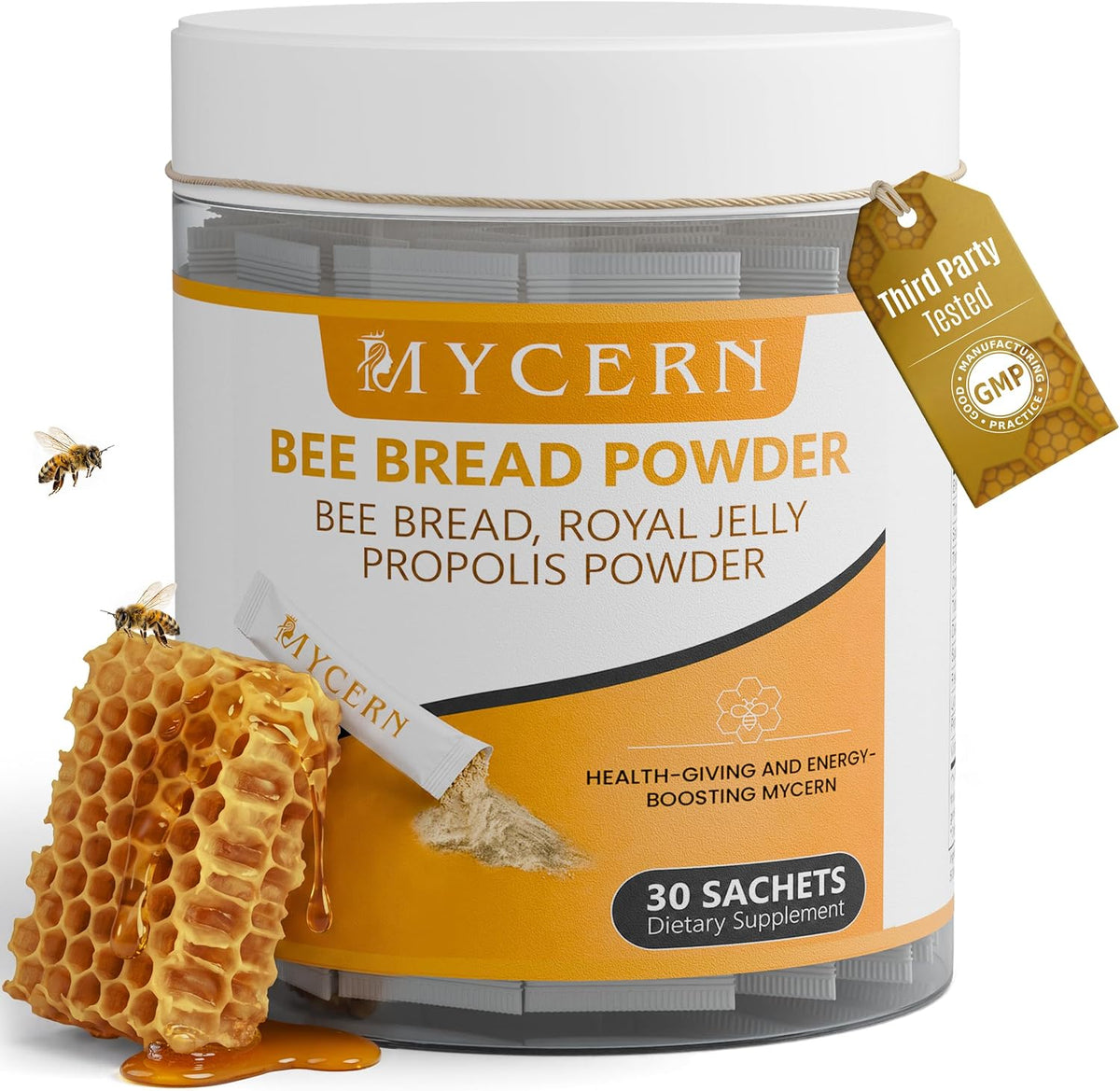
MyCern Bee Bread Powder brings together naturally fermented bee bread, B-complex vitamins, and a full spectrum of polyphenols in one clean, research-backed formula — no stimulants, no crash.
See What's Inside →Why Am I So Tired Every Afternoon?
The post-lunch crash isn't imaginary, but it's rarely just one thing. Afternoon fatigue is almost always several overlapping factors landing at once. Blood sugar swings from a carbohydrate-heavy lunch trigger a glucose drop roughly 60 to 90 minutes later, which is why the slump hits at the same time every day. Poor sleep leaves adenosine, the brain's fatigue chemical, incompletely cleared by midday. Chronic stress keeps cortisol elevated and depletes B5. And underneath all of it, nutrient gaps quietly drain the raw materials your cells need to produce energy in the first place.
That last part is where the biology gets specific. Sustained mental energy isn't just about stimulation, it's about cellular ATP production, the biochemical process by which your mitochondria convert nutrients into usable fuel. B vitamins are essential cofactors in that process. Research published in Nutrients confirms that B1, B2, and B3 are directly involved in mitochondrial energy metabolism in the citric acid cycle. When those nutrients are depleted, no amount of caffeine genuinely fixes the output, you're revving an engine that's already running on fumes.
Bee bread powder doesn't address sleep or hydration. Those are non-negotiable. But for the nutrient gap driving persistent afternoon fatigue, it targets the B-vitamin and mineral deficiencies at the root.
What Makes Bee Bread Different from Regular Bee Pollen
If you've heard of bee pollen, bee bread is its far less famous and arguably more potent cousin. Bee pollen is raw flower pollen collected by honeybees. Bee bread is what happens after that pollen is packed into the honeycomb, mixed with bee saliva and nectar, and left to ferment via lactic acid bacteria for several weeks.
That fermentation process matters enormously. It breaks down the tough outer cellulose wall of the pollen grain, the part that makes raw pollen difficult for the human gut to absorb. A 2022 review in Antibiotics (MDPI) noted that bee bread demonstrates measurably higher bioavailability of nutrients compared to unfermented bee pollen, and that its fermentation profile produces a range of additional bioactive compounds not found in the raw material.
Think of it less like taking a vitamin and more like getting the real thing from a source your body recognizes.

The Nutritional Profile That Professionals Actually Need
Bee bread powder isn't a single-nutrient supplement. It's more like a whole-food matrix — complete protein with all essential amino acids, a natural B-complex profile, polyphenols including quercetin and kaempferol, and minerals covering magnesium, potassium, and zinc.
That combination matters for cognitive performance specifically. Magnesium supports ATP synthesis. Zinc regulates neurotransmitter activity. B6 is essential for serotonin and dopamine production, the chemicals that govern focus, mood stability, and motivation. Understanding how these nutrients work together for cognitive performance explains why bee bread feels different from caffeine, it's supplying what your brain chemistry actually runs on, not overriding it.
Caffeine vs. Bee Bread Powder: How They Support Energy Differently
| Factor | Caffeine | Bee Bread Powder |
|---|---|---|
| Mechanism | Adenosine receptor blockade (stimulant) | Cellular ATP support via B-vitamins & cofactors |
| Energy onset | Fast (15–45 minutes) | Gradual (builds with consistent use) |
| Crash risk | High — rebound fatigue is well-documented | Low — no stimulant mechanism involved |
| Sleep impact | Disrupts if taken after midday | No known disruption to sleep architecture |
| Additional benefits | Minimal nutritional value | Polyphenols, amino acids, minerals, enzymes |
Polyphenols, Mental Fatigue, and the Antioxidant Connection
One of the less-discussed drivers of afternoon brain fog is oxidative stress: the accumulation of free radicals from metabolic activity, screen exposure, and psychological stress throughout the day. Your brain, which accounts for roughly 20% of your body's total oxygen consumption, is disproportionately vulnerable to this.
Polyphenols found in bee bread, particularly flavonoids like quercetin and kaempferol and have been studied for their potential to support neuroprotective pathways. A review examining flavonoid intake and mental performance found associations with measurable improvements in attention, processing speed, and working memory in adult study participants.
Adrenal Support: Why Stress Makes Everything Worse
Chronic workplace stress depletes the micronutrients your body burns through fastest, particularly B5 (pantothenic acid), which is directly involved in cortisol synthesis and among the first nutrients to drop under sustained pressure. Bee bread's fermented B-complex profile makes it worth considering for professionals running on the kind of stress-depleted empty that extra sleep alone doesn't fix.
You've done the research. This is what it points to.
MyCern Bee Bread Powder is formulated around the same science you just read — clean, fermented, bioavailable, and third-party tested. No stimulants, no filler, no guesswork.
Shop Now →How to Actually Use It During a Busy Workday
A measured sachet of bee bread powder can be stirred into juice or blended into a smoothie in under thirty seconds, no blender required. For afternoon slump support, taking it with lunch works better than waiting for the crash to arrive, giving the nutrients time to absorb before the 1–3 pm dip.
It's worth being realistic about timelines. Bee bread isn't a stimulant. The mechanism is nutritional, you're replenishing substrates your body uses for energy and cognitive function. Research on B-vitamin interventions generally reports measurable outcomes after four to twelve weeks of consistent use, though some people notice a difference earlier if their diet has been running low on these key B-vitamin cofactors for some time. Natural alternatives to stimulants tend to work this way and the results build rather than spike, which is precisely what makes them sustainable for daily professional use.

Quality You Can Verify
Every batch of MyCern Bee Bread Powder is independently third-party tested by Eurofins, one of the world's largest and most respected testing networks. Testing covers heavy metals and microbiological safety, along with composition and active-ingredient verification to confirm the product's potency. MyCern Bee Bread Powder is also FDA compliant for the US market. We believe quality should be something you can verify, not just something a brand claims.
Which MyCern supplement fits your wellness goals?
Answer 5 quick questions and our Supplement Advisor will recommend the right formula for your age, lifestyle, and priorities. Free, personalised, no commitment.
Take the Quiz →When to See a Doctor
Supplements may support general wellness, but they are not a substitute for medical care. If you're experiencing any of the following, speak with a qualified healthcare professional before making changes to your routine:
Persistent fatigue that doesn't improve with adequate sleep, rest, or nutrition changes may indicate an underlying condition such as anaemia, thyroid dysfunction, or adrenal insufficiency. Severe or sudden cognitive decline warrants medical investigation rather than a supplement-first response. If you're pregnant, breastfeeding, managing a chronic health condition, or currently taking prescription medication including anticoagulants or immunosuppressants, consult your doctor before adding any new supplement to your routine. Bee-derived products should be avoided by anyone with known bee or pollen allergies. This article is educational in nature and does not constitute medical advice.
Frequently Asked Questions
What is bee bread powder and how does it work in the body?
Bee bread is bee pollen that has been naturally fermented inside the honeycomb alongside nectar and bee secretions. This fermentation process breaks down the tough outer wall of the pollen grain, significantly improving nutrient bioavailability. In powder form, those nutrients — including B-complex vitamins, polyphenols, amino acids, and minerals — may support cellular energy metabolism, cognitive function, and antioxidant defence.
How long does it take to notice results from bee bread powder?
Because bee bread works through nutritional pathways rather than stimulant mechanisms, results build over time. Some people notice improvements in sustained focus and reduced afternoon fatigue within the first two to four weeks; research on B-vitamin interventions generally points to more consistent outcomes after four to twelve weeks. Results may vary depending on individual factors such as baseline nutritional status and stress levels.
Can I use bee bread powder to replace my afternoon coffee?
Many people use bee bread powder as a coffee alternative specifically for the afternoon, and it's a reasonable approach. Unlike caffeine, which works by blocking adenosine receptors — the mechanism that causes the rebound crash — bee bread may support energy through cellular ATP production and B-vitamin replenishment. It won't produce the same immediate jolt, but it also won't leave you wired at midnight. A practical starting point is keeping your morning coffee and replacing the afternoon cup with bee bread powder first, giving your body a few weeks to adjust.
Does the fermentation process mean bee bread contains live bacteria?
The fermentation that produces bee bread is driven by lactic acid bacteria inside the honeycomb, but by the time the product is harvested, dried, and powdered, the live bacterial activity is no longer present in the same way it would be in a probiotic supplement. What the fermentation leaves behind is the important part — a broken-down cell wall that significantly improves how well your gut absorbs the nutrients inside. Think of it as the fermentation doing its job upstream, so your digestive system doesn't have to work as hard.
Who should avoid bee bread powder?
Anyone with a known allergy to bees, honey, or airborne pollen should avoid bee bread products entirely, as allergic reactions — including rare anaphylactic responses — have been reported with bee-derived supplements. Pregnant and breastfeeding women, children, and anyone on prescription medication should consult their healthcare provider before use. If you have any concerns, always consult your healthcare provider before starting.
References
- Kennedy DO. B vitamins and the brain: Mechanisms, dose and efficacy. A review. Nutrients. 2016;8(2):68. doi:10.3390/nu8020068
This comprehensive review details how B-complex vitamins act as essential cofactors in mitochondrial ATP production and neurotransmitter synthesis — directly relevant to the cognitive energy mechanisms discussed in this article. - Bakour M, Laaroussi H, Ousaaid D, et al. Bee bread as a promising source of bioactive molecules and functional properties: An up-to-date review. Antibiotics. 2022;11(2):203. doi:10.3390/antibiotics11020203
This review summarises the nutritional composition of bee bread, its enhanced bioavailability over raw pollen due to lactic acid fermentation, and the range of bioactive compounds associated with energy metabolism and antioxidant activity. - Myburgh KH. Polyphenols in sport and exercise: considerations for the future. International Journal of Sport Nutrition and Exercise Metabolism. 2014;24(2):220–239. doi:10.1123/ijsnem.2014-0005
Provides background on how dietary polyphenols interact with mitochondrial function and oxidative stress pathways — the cellular mechanisms that underpin physical and cognitive fatigue in active adults. - Scholey A, Owen L. Effects of chocolate on cognitive function and mood: A systematic review. Nutrition Reviews. 2013;71(10):665–681. Referenced alongside: Macready AL, et al. Flavonoids and cognitive function: A review of human randomized controlled trial studies and recommendations for future studies. Genes & Nutrition. 2009;4(4):227–242. doi:10.1007/s12263-009-0135-4
This systematic review of human randomised controlled trials on flavonoid intake and cognitive outcomes reported associations with improved attention, processing speed, and working memory — consistent with the polyphenol content found in bee bread. - Kieliszek M, Piwowarek K, Kot AM, et al. Pollen and bee bread as new health-oriented products: A review. Trends in Food Science & Technology. 2018;71:170–180. doi:10.1016/j.tifs.2017.10.021
A widely cited review of bee pollen and bee bread as functional health ingredients, covering their vitamin and mineral profiles — including B-complex and magnesium content — and the human health applications being investigated in contemporary research.
Love this? Read more: Clear Signs Your Body Needs More Bee Bread Powder Benefits (And How to Take It Daily)