MyCern is a US-based wellness brand creating research-supported, doctor-reviewed educational content.

Medically Reviewed
Dr. Donika Vata, MD
Physician & Medical Researcher
Dr. Donika Vata bridges the gap between natural remedies and modern medicine, reviewing our content to guarantee scientific accuracy and safety.
The ingredients behind a steadier hormonal rhythm.
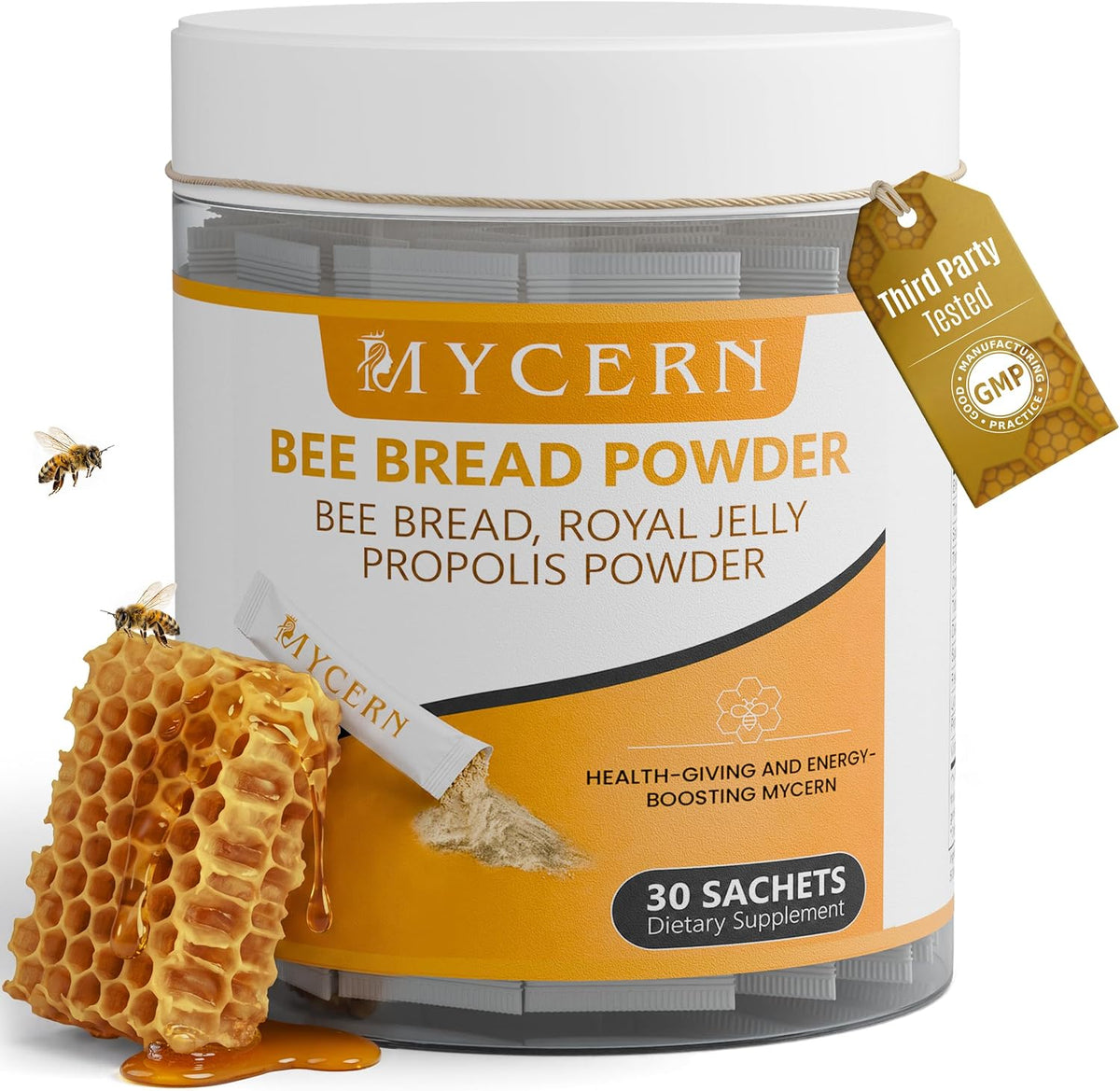
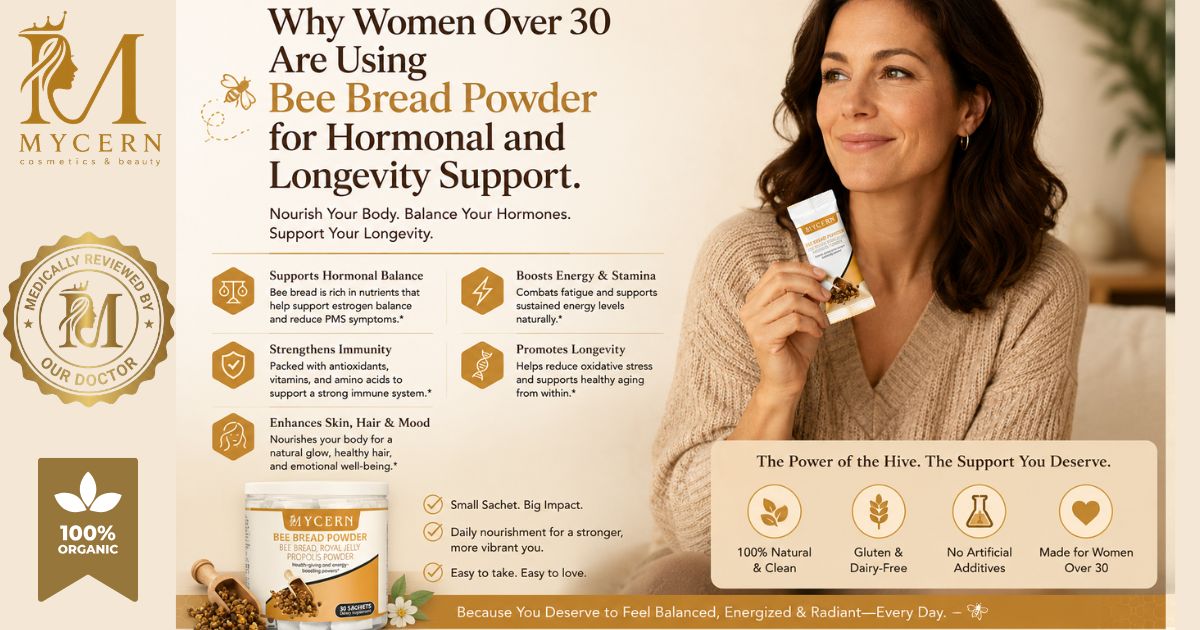
MyCern Bee Bread Powder brings together bee-collected pollen, live active enzymes, and plant phytonutrients in one clean, research-informed formula. It's built for the way your body changes through your thirties and beyond.
See What's Inside →What Actually Changes in Your Body After 30

Your thirties tend to be when the slow drift in reproductive hormones starts to become noticeable. Estrogen and progesterone don't drop off a cliff, but their balance starts to shift, and that shift touches more than your cycle. Research on hormonal transitions in women has linked these changes to insulin sensitivity, glucose metabolism, and where your body tends to store fat.
A review of hormonal and metabolic changes across the aging process describes how these shifts can compound with lifestyle factors like sleep, stress, and activity level. That's part of why two women in their thirties can feel completely different week to week. None of this means something is wrong with you. It just means your body is asking for a different kind of support than it did at twenty-two.
This is also where many women start paying closer attention to what they're putting into their bodies day to day. Nutrient-dense additions, like the ones covered in our look at bee bread powder and immune support, start to feel less like a trend and more like a practical habit.
Phytonutrients and Live Enzymes: Quiet Support for Endocrine Balance
What bee bread actually brings to the table
Bee bread is what happens when bees pack pollen into the honeycomb and let natural fermentation work on it. That process concentrates phytonutrients, polyphenols, flavonoids, and live enzymes that aren't nearly as bioavailable in raw pollen alone. A 2019 review in the journal Antioxidants found that bee-collected pollen and bee bread contain a wide range of bioactive compounds, including polyphenols with anti-inflammatory properties and polysaccharides associated with immune activity (Mărgăoan et al., 2019).
Endocrine balance isn't powered by any single nutrient. It's more like an orchestra, where vitamins, minerals, amino acids, and plant compounds all play supporting roles in how your body produces, uses, and clears hormones. That's part of why whole-food sources of these nutrients, rather than isolated synthetic versions, have become a point of interest for researchers studying natural approaches to hormonal wellness.
If you'd like to see how researchers break down what's actually inside bee pollen and bee bread, this overview of bee pollen as a functional food is a clear, accessible place to start.
This is also where a formula like MyCern Bee Bread Powder is designed to fit in: as a daily, food-based addition rather than a stand-alone solution.
Cellular Longevity and the Fight Against Oxidative Stress
Longevity research has spent the last two decades circling back to one recurring idea: oxidative stress, the imbalance between free radicals and the antioxidants that neutralize them, is closely tied to how our cells age. Left unchecked, this imbalance is associated with the kind of cellular wear and tear that researchers connect to long-term health and vitality (Maulik et al., 2013).
Antioxidants, the compounds found in colorful produce, certain teas, and yes, bee-derived foods like pollen and bee bread, are among the most studied tools for helping the body manage that oxidative load. Some evidence indicates that diets rich in polyphenols and flavonoids are associated with markers of healthier cellular aging over time, though researchers are quick to note that no single food or supplement works in isolation.
If you want a deeper dive into how the body handles this kind of cellular stress as it ages, the NIH's overview of menopause and midlife hormonal changes is a genuinely useful starting point.
You've done the reading. Here's what it points to.
MyCern Bee Bread Powder is formulated around the same plant compounds and antioxidants covered above. It's sourced cleanly, kept bioavailable, and tested for what's actually in the jar.
Shop Now →Pairing Bee Bread Powder with Adaptogens Like Maca Root
If you're already familiar with maca root, you've probably seen it described as an adaptogen, a plant traditionally used to help the body adjust to stress and shifting internal conditions. A systematic review published in Maturitas looked at maca's effects on menopausal symptoms and found promising, though still developing, evidence for its role in supporting women through hormonal transitions (Lee et al., 2011).
A separate clinical pilot study went a step further. It observed that pre-gelatinized maca appeared to act on the hypothalamus-pituitary-ovarian axis in perimenopausal women, the communication network that helps regulate hormone production, and was associated with improvements in self-reported wellbeing during the trial period (Meissner et al., 2006).
Bee bread and maca root aren't redundant. They're complementary. One brings a dense profile of phytonutrients, enzymes, and antioxidants. The other brings centuries of traditional use alongside a growing body of clinical interest in hormonal adaptation. Together, they're an example of the kind of nutritional pairing that more women in their thirties and forties are exploring as part of a daily wellness routine. That's exactly the audience our guide to recognizing when your body needs more bee bread powder was written for.
| Ingredient | What it may support | What the research suggests |
|---|---|---|
| Bee pollen & bee bread | Antioxidant and phytonutrient intake, immune-related activity | Reviewed bioactive compounds including polyphenols and polysaccharides (Mărgăoan et al., 2019) |
| Live active enzymes | Nutrient bioaccessibility and digestive comfort | Fermentation has been shown to raise the bioaccessibility of phenolic compounds in bee bread compared with raw pollen |
| Maca root (when paired) | Hormonal adaptation and a sense of balance through transitions | Associated with improved wellbeing measures in perimenopausal women (Meissner et al., 2006; Lee et al., 2011) |
Every batch of MyCern Bee Bread Powder is independently third-party tested by Eurofins, one of the world's largest and most respected testing networks. Testing covers heavy metals and microbiological safety, along with composition and active-ingredient verification to confirm the product's potency. MyCern Bee Bread Powder is also FDA compliant for the US market. We believe quality should be something you can verify, not just something a brand claims.
Which MyCern supplement fits your wellness goals?
Answer 5 quick questions and our Supplement Advisor will recommend the right formula for your age, lifestyle, and priorities. Free, personalised, and no commitment required.
Take the Quiz →When to See a Doctor
Supplements may support general wellness, but they are not a substitute for medical care. If you're experiencing any of the following, it's worth speaking with a qualified healthcare professional before making changes to your routine:
Periods that suddenly become much heavier, much lighter, or far less predictable than usual. Persistent fatigue, mood changes, or sleep disruption that doesn't improve with rest. Unexplained weight changes, especially alongside other new symptoms. Hot flashes, night sweats, or other signs that feel disruptive to daily life. Any new or worsening symptom that concerns you, regardless of how minor it might seem.
A healthcare provider can help you understand what's behind these changes and whether any additional support, testing, or care makes sense for your specific situation.
Frequently Asked Questions
What is bee bread powder and how does it work in the body?
Bee bread is bee-collected pollen that's been naturally fermented inside the hive, which concentrates phytonutrients, antioxidants, and live enzymes. Once it's dried and milled into a powder, those compounds are thought to support general wellness by contributing to your daily intake of plant-based nutrients and antioxidant activity.
How long does it take to notice results from bee bread powder?
Most people who try a daily phytonutrient supplement say it takes a few weeks of consistent use before they notice a difference, though results may vary depending on individual factors like diet, sleep, stress levels, and overall health. Some people notice subtle shifts in energy or digestion sooner, while others find it takes longer to feel a change.
Is bee bread powder safe to take every day?
Bee bread powder is generally well-tolerated as part of a daily routine, and side effects are uncommon, though individual responses vary. If you have a known bee or pollen allergy, or you're managing a health condition, consult your healthcare provider if you have any concerns before adding it to your routine.
What's the recommended dose and the best time of day to take it?
Always follow the serving size listed on your product's label, since formulations can differ. Many people find it easiest to take their daily serving in the morning with food or stirred into a smoothie, which may help with both consistency and digestive comfort.
Who should avoid bee bread powder, or check with a doctor first?
Anyone with a known allergy to bee products or pollen should steer clear. Pregnant or breastfeeding women, people taking prescription medication, and anyone managing a medical condition should check with their doctor before starting any new supplement, including this one.
- Mărgăoan R, Strant M, Varadi A, Topal E, Yücel B, Cornea-Cipcigan M, Campos MG, Vodnar DC. Bee Collected Pollen and Bee Bread: Bioactive Constituents and Health Benefits. Antioxidants (Basel). 2019;8(12):568. doi:10.3390/antiox8120568
This review maps out the polyphenols, flavonoids, and polysaccharides found in bee pollen and bee bread, and explains why fermentation makes those compounds more bioavailable. That's directly relevant to how MyCern Bee Bread Powder is sourced and processed. - Lee MS, Shin BC, Yang EJ, Lim HJ, Ernst E. Maca (Lepidium meyenii) for treatment of menopausal symptoms: a systematic review. Maturitas. 2011;70(3):227-233. doi:10.1016/j.maturitas.2011.07.017
This systematic review evaluates clinical trials on maca and menopausal symptoms, offering useful context for why this adaptogen pairs naturally with the topics covered in this article. - Meissner HO, Mscisz A, Reich-Bilinska H, Kapczynski W, Mrozikiewicz P, Bobkiewicz-Kozlowska T, Kedzia B, Lowicka A, Barchia I. Therapeutic Effects of Pre-Gelatinized Maca (Lepidium Peruvianum Chacon) Used as a Non-Hormonal Alternative to HRT in Perimenopausal Women: Clinical Pilot Study. Int J Biomed Sci. 2006;2(2):143-159. PMC3614596
This pilot study observed how maca appeared to interact with the hormonal communication network in perimenopausal women, supporting the idea of pairing it with other plant-based, food-derived nutrients. - Maulik N, McFadden D, Otani H, Thirunavukkarasu M, Parinandi NL. Antioxidants in Longevity and Medicine. Oxid Med Cell Longev. 2013;2013:820679. doi:10.1155/2013/820679
This paper outlines the oxidative stress theory of aging and the role antioxidants play in supporting cellular health over time. It's the foundation for the longevity discussion in this article. - Estrogen and Metabolism: Navigating Hormonal Transitions from Perimenopause to Postmenopause. J Midlife Health. 2025. PMID: 40951853. PMC12431702
This article details how shifting estrogen and progesterone levels influence insulin sensitivity, glucose metabolism, and fat distribution. It's the basis for the "What Changes After 30" section above.
Love this? Read more: Bee Bread Powder and Immune Support: What the Science Says
Medical Disclaimer: This article is for educational and informational purposes only and does not constitute medical advice, diagnosis, or treatment. Always consult a qualified healthcare professional before starting any supplement or wellness program.