

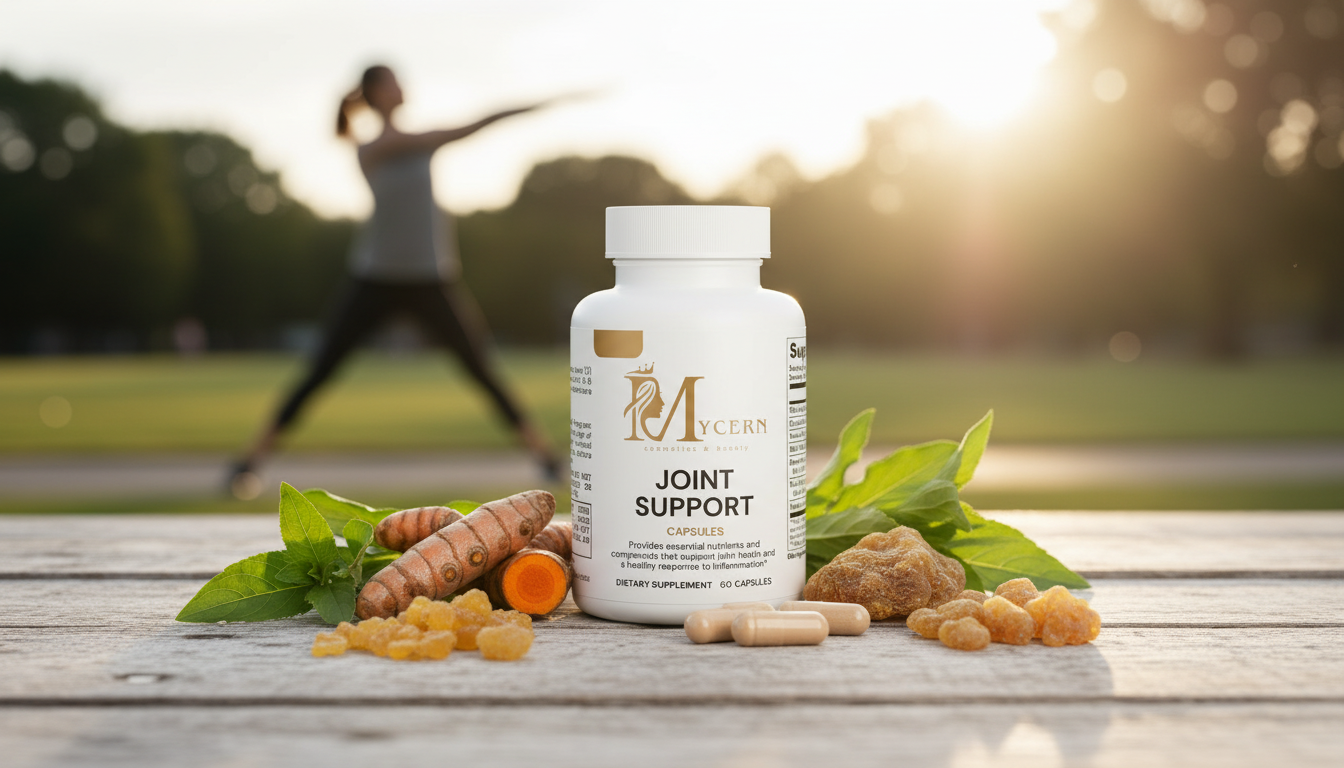
Joint discomfort is something many people experience as they age or remain active. Stiff knees, sore hips, and limited mobility can affect quality of life, making simple daily tasks challenging. One of the most widely researched supplements for joint maintenance is glucosamine, a naturally occurring compound found in cartilage that supports joint structure and function. But not all glucosamine supplements are created equal, and understanding the science behind them can help you make informed choices for long-term joint health.
This article explores:
-
How glucosamine for joint health works biologically
-
Differences between animal-derived and plant-based glucosamine
-
Key research findings on glucosamine’s effectiveness for cartilage support and osteoarthritis
-
How MyCern Joint Support combines evidence-based ingredients for natural joint pain relief
How Glucosamine Supports Joint Health

Glucosamine is an amino sugar that plays a critical role in building and maintaining cartilage, the connective tissue that cushions joints. Healthy cartilage allows smooth movement and absorbs the stress from everyday activities. Over time, cartilage can wear down due to age, repetitive motion, or conditions like osteoarthritis, leading to pain, stiffness, and decreased mobility.
Supplementing with glucosamine has been studied for its ability to maintain cartilage health and support joint function. Research indicates that consistent glucosamine use may reduce cartilage degradation, enhance joint comfort, and promote mobility in adults experiencing mild joint issues. Beyond structural support, glucosamine may also have mild anti-inflammatory effects, helping with joint discomfort without relying solely on pain medications.
Animal-Derived vs. Plant-Based Glucosamine
Traditionally, glucosamine supplements are extracted from shellfish, which may not be suitable for people with allergies or dietary restrictions. This is where plant-based glucosamine, like GlucosaGreen®, comes in.
Key differences:
-
Source: Animal-derived glucosamine comes from shrimp or crab shells; vegetal glucosamine is derived from non-GMO corn fermentation.
-
Purity and sustainability: Plant-based glucosamine avoids potential shellfish allergens and supports environmentally friendly production.
-
Effectiveness: Studies show that GlucosaGreen® vegetal glucosamine HCl is as effective as animal-derived glucosamine for maintaining joint cartilage and reducing mild discomfort, making it a safe, vegan-friendly option.
This innovation allows a wider population to benefit from glucosamine without compromising safety or potency.

What Research Says About Glucosamine HCl
Clinical studies support glucosamine HCl for joint health:
-
Research indicates it may help slow cartilage degradation in people with early osteoarthritis.
-
Several trials show improved joint mobility and comfort after consistent supplementation over 8–12 weeks.
-
Combining glucosamine with other joint-supporting nutrients, such as MSM, turmeric, or Boswellia, can enhance results, supporting both structural integrity and anti-inflammatory effects.
Although glucosamine is not a cure for osteoarthritis, long-term studies suggest it is a safe, natural strategy to support joint cartilage and help maintain mobility. Importantly, results are gradual—consistent daily use over several weeks is required to notice meaningful changes.
MyCern Joint Support: A Complete Approach
MyCern Joint Support uses GlucosaGreen® vegetal glucosamine HCl combined with MSM, turmeric, and Boswellia to provide multi-faceted joint support. This blend not only helps maintain healthy cartilage but also supports joint comfort, flexibility, and overall mobility. By using high-quality, plant-based glucosamine, MyCern ensures safety, sustainability, and potency, making it a reliable choice for individuals seeking natural joint pain relief and cartilage protection.

How to Maximize the Benefits of Glucosamine
To get the most from glucosamine supplementation:
-
Consistency is key: Take glucosamine daily, as benefits accumulate gradually over 4–8 weeks.
-
Combine with supporting nutrients: Ingredients like MSM, turmeric, and Boswellia may enhance joint comfort and reduce mild inflammation.
-
Maintain healthy habits: Regular low-impact exercise (walking, swimming) and maintaining a healthy weight reduce stress on joints, complementing supplementation.
-
Check product quality: Choose supplements with verified glucosamine content, evidence-based formulations, and, if needed, plant-based sources for allergy or dietary considerations.
By integrating these strategies, glucosamine supplementation becomes a practical part of a holistic joint health routine.
Conclusion
Scientific research consistently supports the use of glucosamine for joint health, particularly glucosamine HCl, for maintaining cartilage integrity and promoting mobility. Plant-based glucosamine, like GlucosaGreen®, offers a sustainable, vegan-friendly alternative without compromising effectiveness. Combined with other supportive ingredients and healthy lifestyle habits, glucosamine supplements can help individuals enjoy natural joint pain relief, improved mobility, and long-term joint wellness. Choosing a high-quality supplement, such as MyCern Joint Support, ensures you receive evidence-backed benefits in a safe, convenient, and sustainable way.
References
- Reginster, J. Y., Deroisy, R., Rovati, L. C., Lee, R. L., Lejeune, E., Bruyere, O., ... & Gossett, C. (2001). Long-term effects of glucosamine sulphate on osteoarthritis progression: a randomised, placebo-controlled clinical trial. The Lancet, 357(9252), 251-256.
- Ogata, T., Ideno, Y., Akai, M., Seichi, A., Hagino, H., Iwaya, T., ... & Hayashi, K. (2018). Effects of glucosamine in patients with osteoarthritis of the knee: a systematic review and meta-analysis. Clinical Rheumatology, 37(9), 2479-2487.
- Simental-Mendia, M., Sanchez-Garcia, A., Vilchez-Cavazos, F., Acosta-Olivo, C. A., Pena-Martinez, V. M., & Simental-Mendia, L. E. (2018). Effect of glucosamine and chondroitin sulfate in symptomatic knee osteoarthritis: a systematic review and meta-analysis of randomized placebo-controlled trials. Rheumatology international, 38(8), 1413-1428.
- McAlindon, T. E., Bannuru, R. R., Sullivan, M. C., Arden, N. K., Berenbaum, F., Bierma-Zeinstra, S. M., ... & Underwood, M. (2014). OARSI guidelines for the non-surgical management of knee osteoarthritis. Osteoarthritis and cartilage, 22(3), 363-388.


