If you've been exploring natural supplements, you've probably come across both bee pollen and bee bread. They sound similar. They come from the same place. But they are not the same product, and the difference between them matters more than most people expect when they first start looking into it.
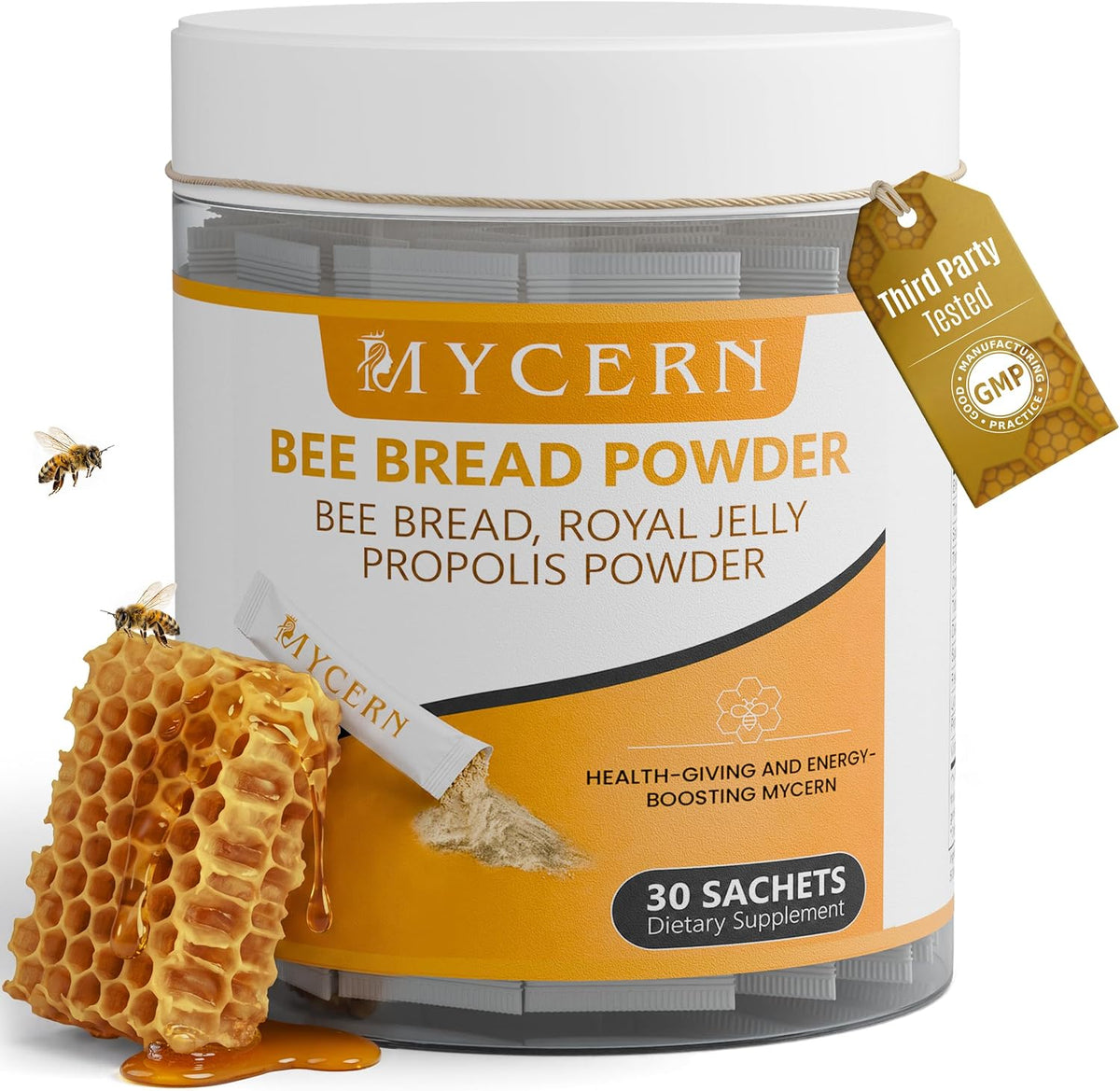
This guide explains what each one is, how they compare on nutrition and absorption, and which one is worth your time and money. If you're already leaning toward bee bread specifically, MyCern Bee Bread Powder is a good place to start your research.
What Is Bee Pollen? The Raw, Unfermented Superfood from the Hive
Bee pollen is collected by worker bees as they move from flower to flower. They pack the pollen granules onto their back legs using a little nectar as a natural binder, then carry it back to the hive where it gets stored as food for the colony.
Raw bee pollen contains protein, B vitamins, minerals, enzymes, and antioxidants. Its flavor tends to be floral and faintly bitter, and the color varies depending on which plants the bees visited. People have used it as a wellness supplement for centuries, and there is genuine research behind some of those traditional uses.
The main limitation of raw bee pollen is structural. Each pollen granule has a hard outer shell called the exine layer. The human digestive system struggles to break through it, which means a significant share of the nutrients in raw pollen pass through the gut without being absorbed. You get some benefit, but not the full picture the nutritional label suggests.
What Is Bee Bread? Fermented Bee Pollen with Higher Nutrient Bioavailability
Bee bread is what raw pollen becomes after natural fermentation inside the hive. Worker bees pack fresh pollen into honeycomb cells, layer it with honey and bee secretions, then seal the cells. Over several weeks, lactic acid bacteria break down the tough outer shell of the pollen through fermentation, transforming the raw material into something the body can actually work with.
The finished product looks like small, dense, dark pellets. The flavor is more complex than raw pollen, usually earthy with a mild tang. More importantly, the fermentation process changes the nutritional profile in ways that matter for absorption and gut health.
Think of it this way: fermentation does the digestive work before the supplement ever reaches you. The hard shell breaks down, nutrients become accessible, and the concentration of beneficial compounds actually increases through the process. The same raw material goes in and a significantly more bioavailable product comes out.

Bee Bread vs Bee Pollen: The Real Differences in Nutrition, Absorption, and Gut Health
Bioavailability: Which One Does Your Body Actually Absorb?
This is the most important practical difference between the two. Raw bee pollen has strong nutrients on paper, but limited absorption in practice. The hard pollen shell means your gut takes in far less than the label implies. A growing body of bee bread research consistently shows that fermentation increases free amino acid content and improves the availability of phenolic compounds compared to raw pollen. The exine barrier is gone. More of what you swallow actually gets used.
Probiotic Content: An Advantage That Raw Pollen Cannot Match
Raw bee pollen does not contain live probiotics. Bee bread does. The lactic acid bacteria responsible for fermentation remain active in the finished product. For gut health specifically, this gives bee bread an advantage that has nothing to do with vitamins or minerals. You get the nutrient profile of fermented pollen plus the gut-supportive benefit of live cultures in a single supplement.
Antioxidant Levels: How Fermentation Changes the Numbers
Both products contain antioxidants. But multiple studies have found that fermentation increases the total antioxidant capacity of bee bread compared to raw pollen. The process releases polyphenols that were previously locked inside the pollen shell. Per serving, bee bread delivers more antioxidant activity. That matters for skin health, immune support, and cellular protection.
Protein and Amino Acid Profile: Complete, but Not Equally Usable
Raw bee pollen is often cited as a complete protein, meaning it contains all essential amino acids. Bee bread is also a complete protein source. The difference is that fermentation raises the proportion of free amino acids, which are easier for the body to digest and put to work. Total protein content is similar in both. How well your body can use that protein is not.
Bee Bread vs Bee Pollen: Which One Should You Actually Take?
It depends on what you are trying to accomplish. Raw bee pollen is easier to find and usually costs less. It still delivers real nutritional value, and for someone with strong digestion who just wants to add a broader range of micronutrients to their diet, it is a reasonable option.
But if you want maximum absorption, probiotic support, and a more concentrated antioxidant benefit, bee bread is the better product. Fermentation solves the one structural problem that limits raw pollen, which is the hard exine shell, while adding gut-health benefits and raising antioxidant activity. That is not a marginal difference. The gap in bioavailability between the two is well documented in the research literature.
For people with digestive sensitivity, bee bread also tends to be gentler. The pre-fermented structure is easier on the gut than raw pollen, which can cause mild irritation in some people who react to raw plant material. If raw pollen has ever felt uncomfortable, bee bread is worth trying instead.
Who Benefits Most from Fermented Bee Bread Supplements?
Bee bread fits well for people who:
- Want a natural, whole-food source of protein, B vitamins, and antioxidants with better absorption than raw pollen
- Are focused on gut health and want probiotic support alongside their micronutrients
- Have tried raw bee pollen before without noticing much effect
- Prefer whole-food supplements over isolated compounds
- Are supporting skin health or immune function through diet and supplementation
One note worth stating clearly: anyone with a bee or pollen allergy should talk to a doctor before using any bee-derived product. That applies to raw pollen and bee bread equally.
"Bee pollen contains many nutrients, including carbohydrates, fat, protein, vitamins, minerals, and antioxidants. It may also have anti-inflammatory, antioxidant, and antimicrobial properties." -Healthline
Bee bread carries all of those same compounds, with one critical upgrade: the fermentation process removes the structural barrier that limits how much of it your body can absorb. The nutritional potential that raw pollen contains but cannot always deliver becomes reliably accessible in bee bread form.
How to Use Bee Bread Powder: Practical Tips for Your Daily Skincare and Wellness Routine
Bee bread powder is one of the easiest ways to get fermented bee pollen into your daily routine. You can blend it into smoothies, stir it into yogurt, mix it into oatmeal, or take it with water. The earthy, mildly sweet flavor works well in most recipes without being overpowering.
Most people start with about half a teaspoon per day and increase from there based on how they feel. Consistency matters more than quantity. A small daily dose sustained over weeks produces better results than large amounts taken occasionally.
Bee bread pairs well with collagen peptides, vitamin C, and probiotic supplements. It does not compete with most other wellness staples, so adding it to an existing routine is straightforward. For skin-focused users, it works particularly well as part of an inside-out approach alongside topical actives.

Frequently Asked Questions
What's the real difference between bee bread and bee pollen?
In one sentence: bee pollen is the raw flower pollen bees collect, while bee bread is that same pollen after it ferments in the hive, which makes it far easier for your body to absorb. Bee bread is sometimes called "perga," its traditional name. During fermentation, lactic acid bacteria break down the pollen's tough outer shell (the exine), so more of the protein, B vitamins, and antioxidants actually become available to you. Bee bread also carries live cultures from that fermentation, which raw pollen does not. If you want the fuller science, see our guide to bee bread benefits and nutrition. Think of pollen as the raw ingredient and bee bread as the pre-digested, upgraded version.
How long does it take to notice results from bee bread?
Most people who take bee bread daily start to notice steady, even energy within about two to four weeks, though this varies from person to person. Because bee bread is a whole food rather than a stimulant, the changes tend to build gradually instead of giving a quick spike and crash. Consistency matters more than the size of the dose: a small amount taken every day works better than a large amount taken now and then. Some people notice gut comfort sooner and energy or skin benefits a little later. Results may vary depending on your diet, sleep, and individual factors.
Is bee bread safe to take every day?
For most healthy adults, bee bread is generally well-tolerated as a daily food-amount supplement. Because it is already fermented, its structure tends to be gentler on the stomach than raw pollen, which can irritate some people. A sensible approach is to start with a small serving, about a quarter to half a teaspoon, so your gut can adjust, then build up slowly. Pay attention to how you feel and stop if anything seems off. If you have any health concerns or take medication, consult your healthcare provider before adding it to your routine.
How much bee bread powder should I take, and how do I use it?
Most people start with about half a teaspoon of bee bread powder per day and adjust from there based on how they feel. It blends easily into smoothies, yogurt, oatmeal, or plain water, and its mild, earthy-sweet flavor works in most recipes. One practical tip: avoid adding it to very hot food or baking with it, since high heat can reduce the live cultures and some of the heat-sensitive nutrients that make fermented pollen worthwhile. It also pairs well with collagen, vitamin C, and probiotics without competing with them. You can find our fermented option here: MyCern Bee Bread Powder.
Who should avoid bee bread, or be cautious with it?
Anyone with a bee or pollen allergy should avoid bee-derived products, including both bee bread and raw pollen, and should speak with a doctor first, because reactions can range from mild to serious. Pregnant or breastfeeding women, people taking medication, and anyone with an existing medical condition should also check with a healthcare provider before starting. If you are unsure how you might react, it is reasonable to begin with a very small amount and watch closely. When in doubt, consult your healthcare provider before use.
Bee Bread vs Bee Pollen: The Bottom Line
Both are real, natural products with documented nutritional value. But bee bread is the more complete option. Fermentation addresses the core limitation of raw pollen, improves the amino acid profile, adds live cultures for gut health, and raises antioxidant activity. For anyone who wants results from a supplement rather than just a label that sounds impressive, bee bread has a clear edge.
The quality of the source matters too. Bee bread that is harvested carefully and minimally processed delivers meaningfully more than a product that has been heat-treated or poorly handled. Learn more and explore our full range of wellness supplements at MyCern.
Research Highlight
A study published in the peer-reviewed journal Molecules found that bee bread contains significantly higher concentrations of free amino acids and total phenolic compounds than raw bee pollen, with fermentation measurably increasing antioxidant activity across multiple tested samples. The authors noted that the lactic acid fermentation process was the primary driver of improved nutrient availability.
Source: MDPI Molecules Journal, Bee Bread Research Collection